Why Lhasa Deserves 4 Full Days
Many travelers rush through Lhasa in 2 days, but that barely scratches the surface. With 4 days, you can properly acclimatize to the 3,650m altitude while exploring the city at a relaxed pace.
Day 1: Arrive & Acclimatize
Your first day should be dedicated entirely to rest. The altitude hits harder than you expect — even fit travelers feel breathless. Stay hydrated, avoid alcohol, and take it easy.
Pro tip: Ask your hotel for butter tea. It actually helps with acclimatization, and the salty, creamy taste grows on you.
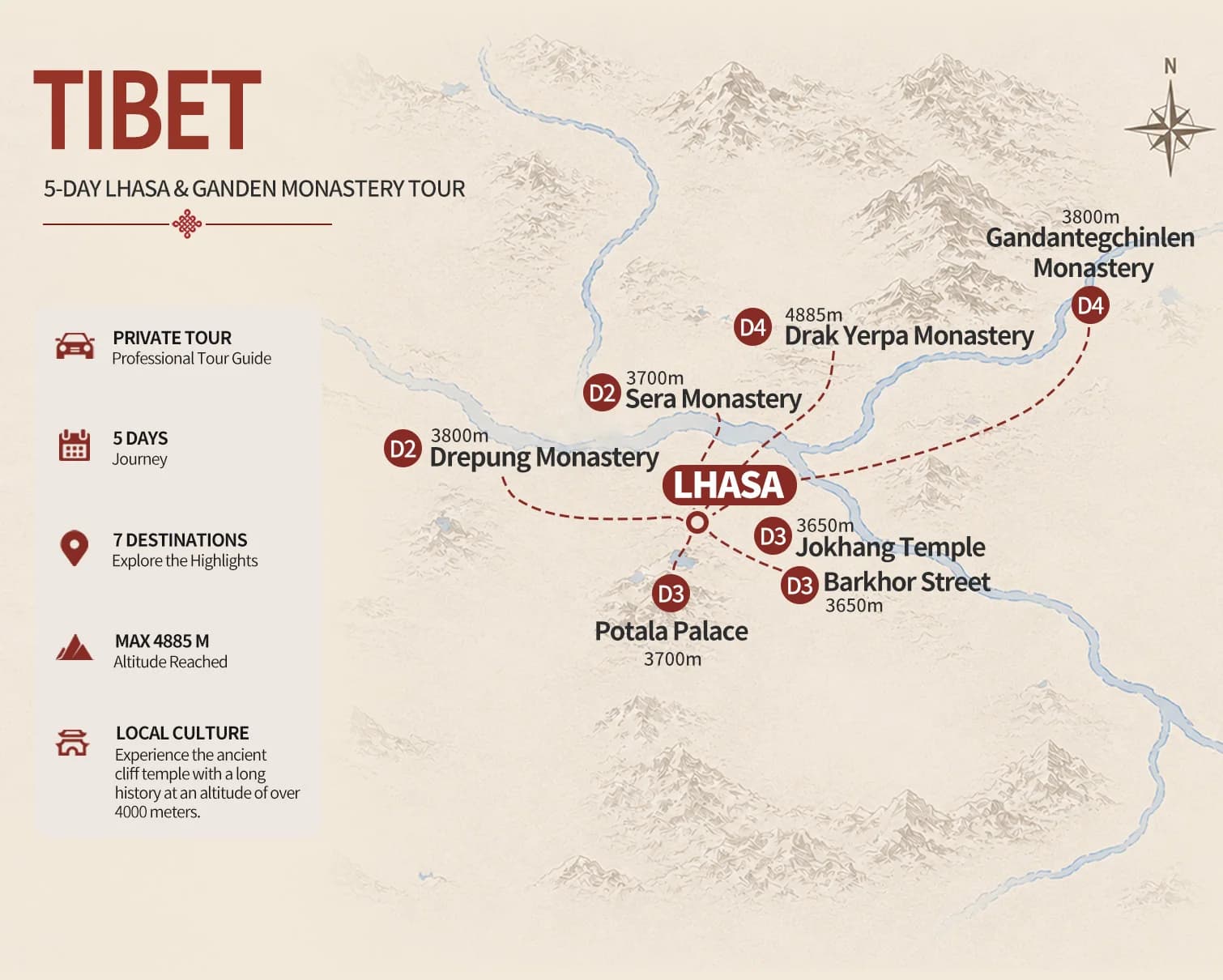
Day 2: Drepung & Sera Monasteries
Drepung Monastery
Once the world's largest monastery with over 10,000 monks, Drepung is a sprawling complex on the hillside west of Lhasa. Arrive early (before 9 AM) to avoid crowds. The main assembly hall and the Ganden Palace are must-sees.
Sera Monastery — The Debates
The highlight of any Lhasa visit. Every afternoon at 3 PM, monks gather in the debating courtyard for a 600-year-old tradition. They clap, stomp, and argue Buddhist philosophy with theatrical intensity. Arrive by 2:30 PM to get a good viewing spot.
Day 3: Potala Palace & Jokhang Temple
Potala Palace
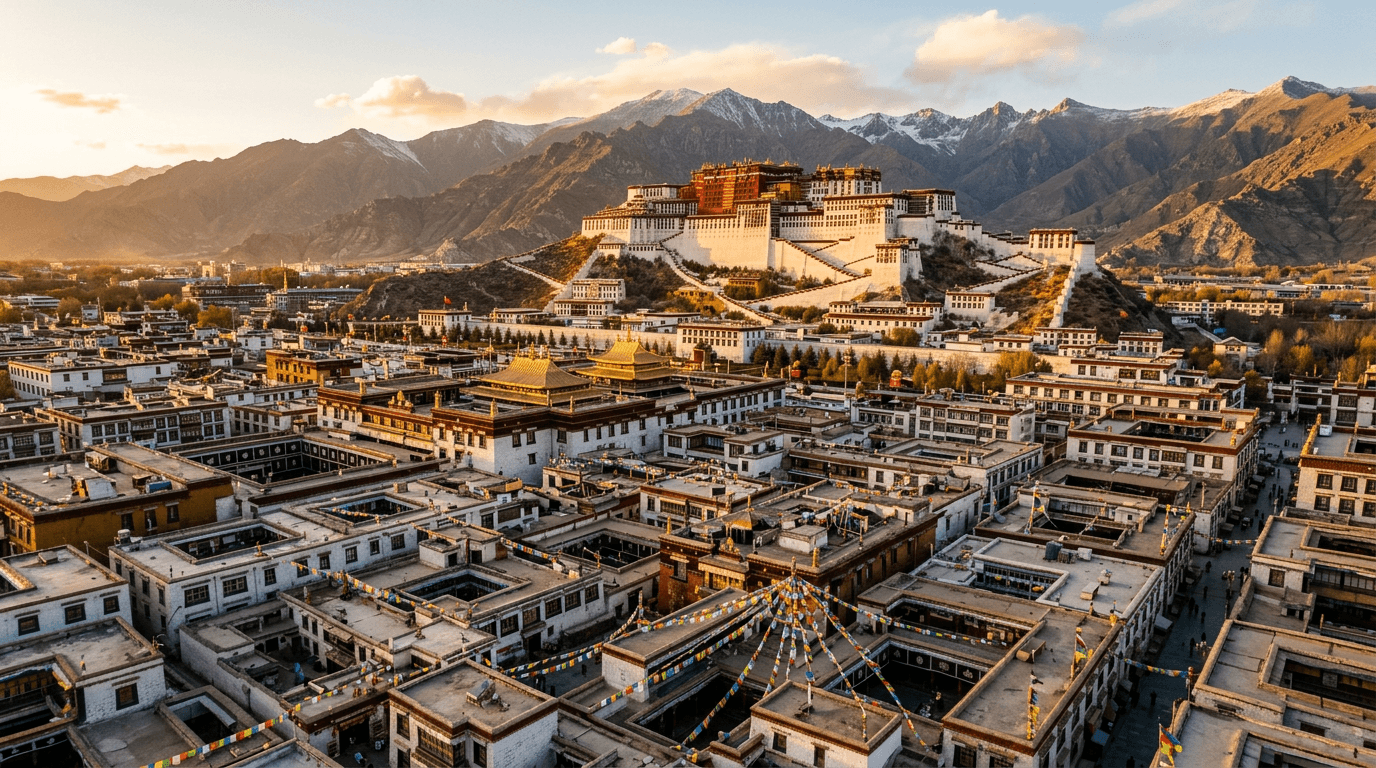
The iconic symbol of Tibet. Book your ticket in advance — daily visitor numbers are strictly limited. The palace has 999 rooms across 13 stories. Allow at least 2 hours.
Important: Photography is not allowed inside the chapels.
Jokhang Temple & Barkhor Street
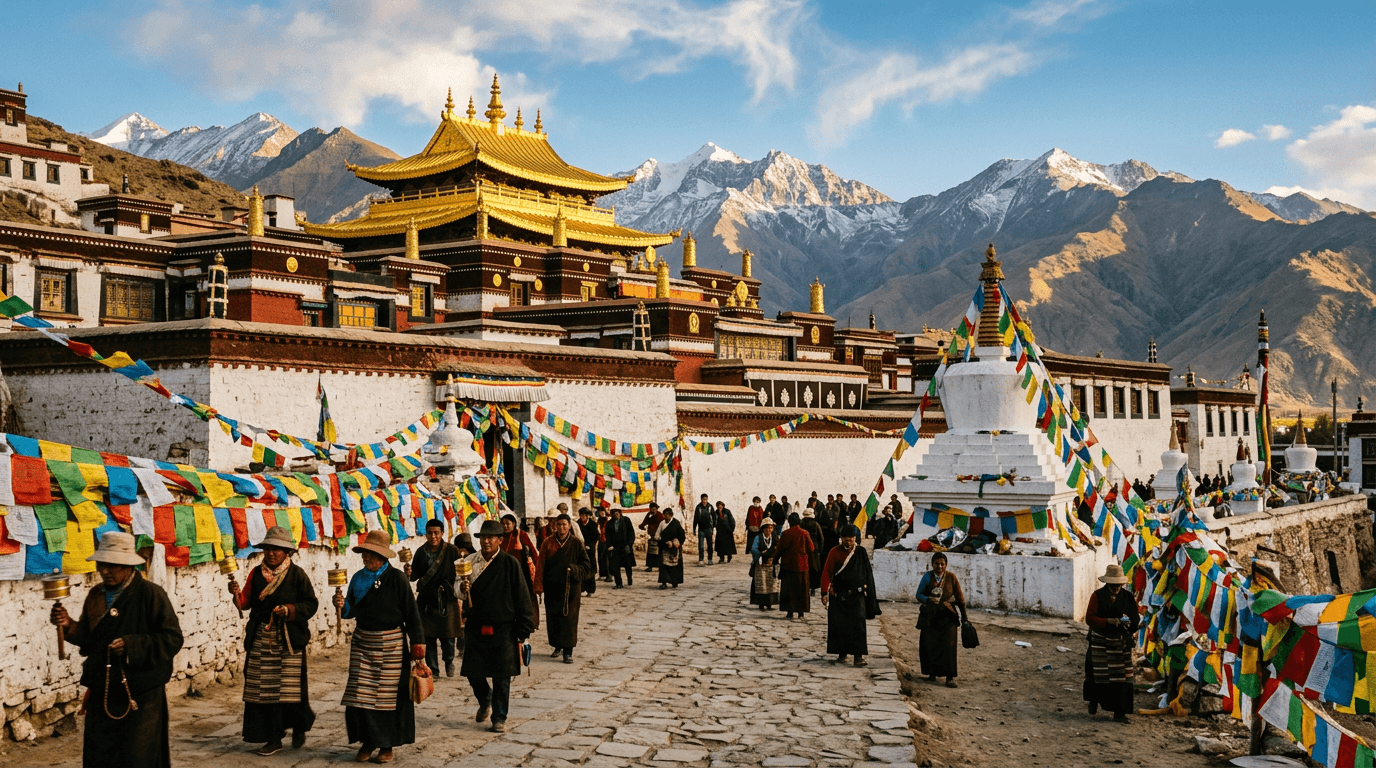
The holiest temple in Tibet, housing the precious Jowo Shakyamuni statue. After visiting, join the pilgrims walking the Barkhor kora (clockwise circuit). Stop at a sweet tea house on the street — this is where real Lhasa life happens.
Day 4: Departure
If your flight is in the afternoon, spend the morning exploring Barkhor Street's shops for souvenirs — Tibetan prayer beads, singing bowls, and thangka paintings make great gifts.
Practical Tips
- Altitude: 3,650m. Take it slow on Day 1.
- Best season: Year-round, but April–October has the best weather.
- Permits: Tibet Travel Permit required (your agency handles this).
- Currency: Chinese Yuan only. ATMs available in Lhasa.
- Dress code: Cover shoulders and knees when visiting temples.