For foreign tourists visiting Tibet for the first time and planning to tour monasteries.
Monasteries in Tibet are not only centers of Tibetan Buddhist faith but also the most direct window into Tibetan culture. For foreign visitors, a respectful visit to a monastery not only shows regard for local beliefs but also allows for a deeper and more unhurried travel experience.
The following guide offers actionable advice focusing on the three areas where issues most commonly arise: attire, photography, and offerings. If you cannot remember every detail, simply keep one principle in mind: when in doubt, pause, observe what the pilgrims around you are doing, and quietly follow suit.
I. Attire: Please check these three things before entering.
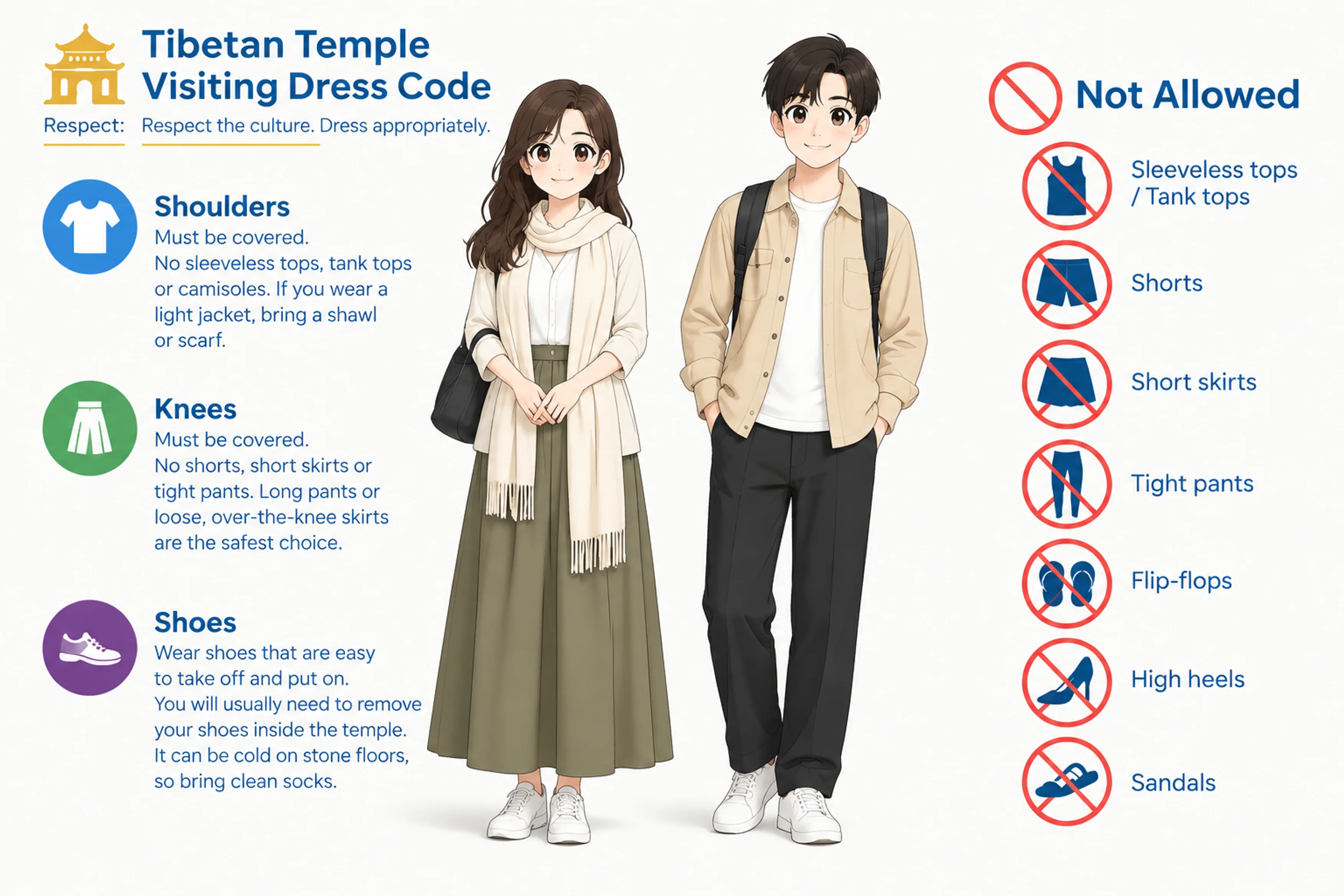
Dress Code Checklist for Entry
Shoulders: Must be covered. Sleeveless tops, tank tops, and camisoles are not appropriate. If you are wearing a lightweight jacket, bring a shawl or scarf as a backup.
Knees: Must be covered. Shorts, short skirts, and leggings are not suitable. Long trousers or loose-fitting skirts that extend below the knee are the safest choices.
Footwear: Wear shoes that are easy to put on and take off. You usually need to remove your shoes before entering the interior of a Buddhist hall; since the stone floors in some halls can be quite cold, it is recommended to wear a clean pair of socks.
Three things to do the moment you walk through the door
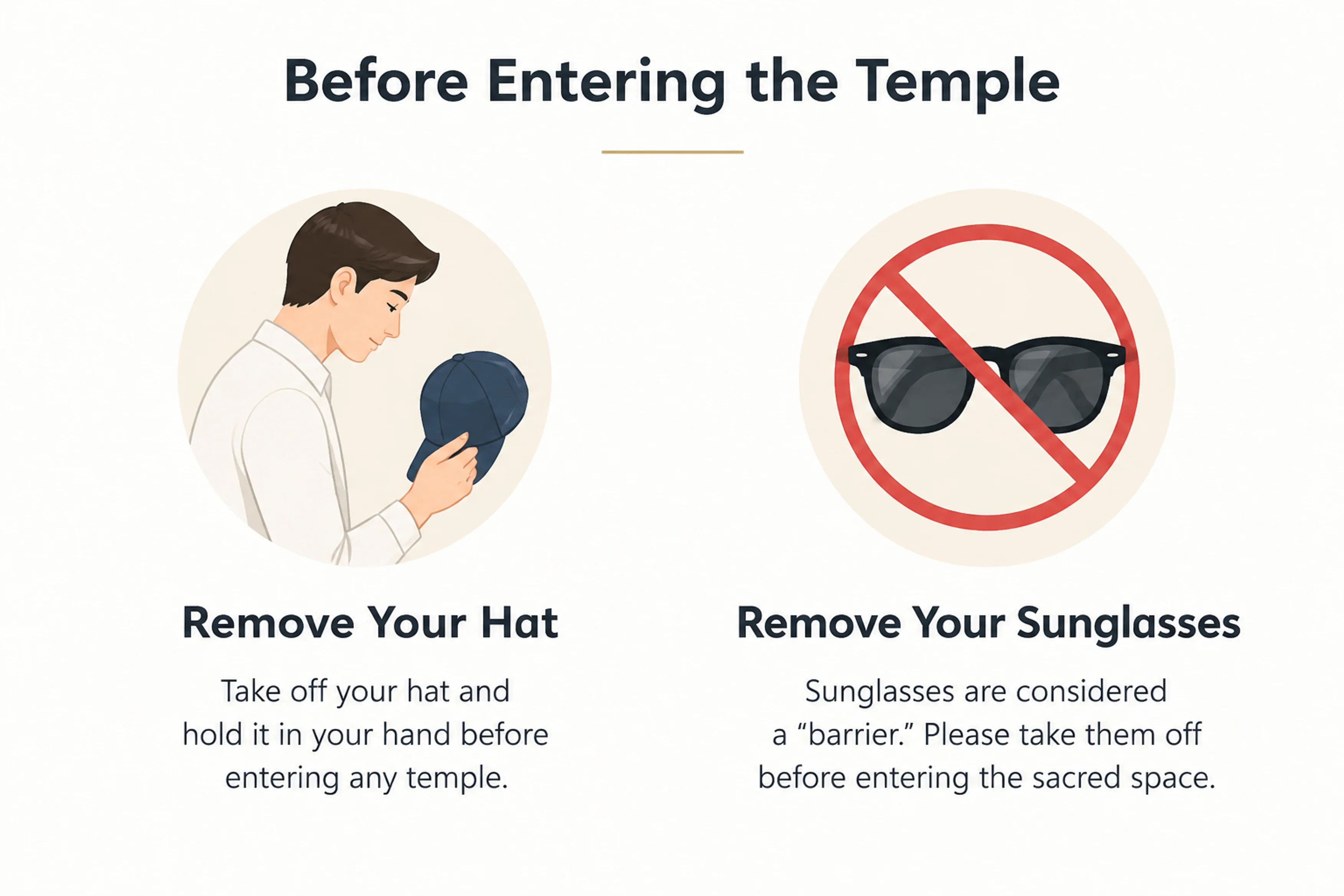
Remove your hat. Before entering any temple hall, remove your hat and hold it in your hand.
Remove your sunglasses. Sunglasses are viewed as a "barrier" and should be removed when entering a sacred space.
Ensure there are no meat products in your pockets. Temples generally maintain a vegetarian and fire-safe environment; do not bring meat or flammable items inside.
A point easily overlooked
Do not step on the threshold. Step over it instead. This rule applies to almost all Tibetan monasteries.
II. Photography: Ask before shooting; if unsure, don't shoot.
Photography is the area where tourists are most likely to inadvertently offend others. There is only one core rule: assume you cannot take a photo unless you have obtained explicit permission.
Places where photography is allowed (usually)
Monastery exteriors, courtyards, and building facades: Photography is generally permitted at main gates, outer walls, and open-air courtyards.
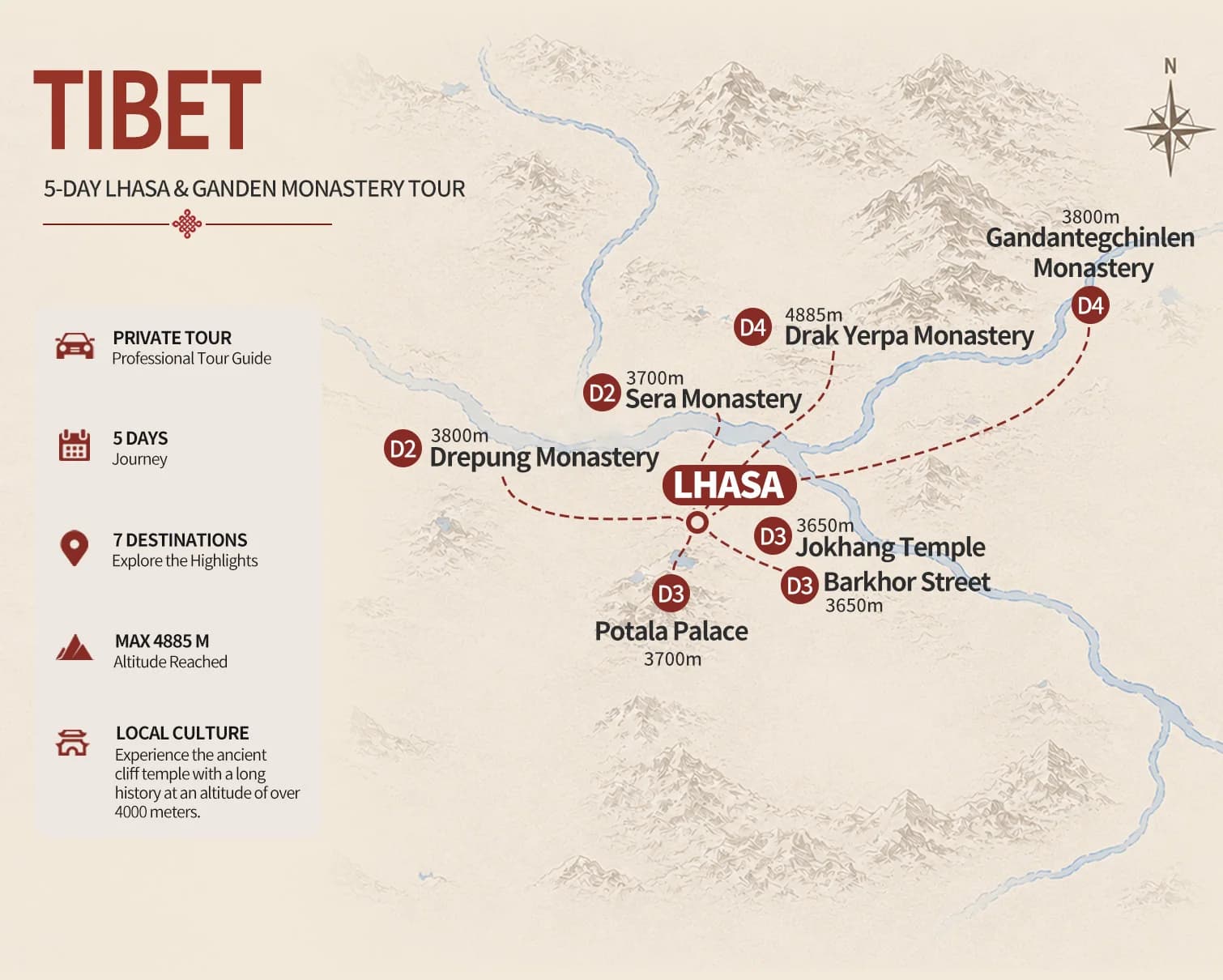
Debate grounds: For events such as the monk debates at Sera Monastery in Lhasa, you may take photos from a distance using a zoom lens from designated areas, but do not enter the actual debate area.
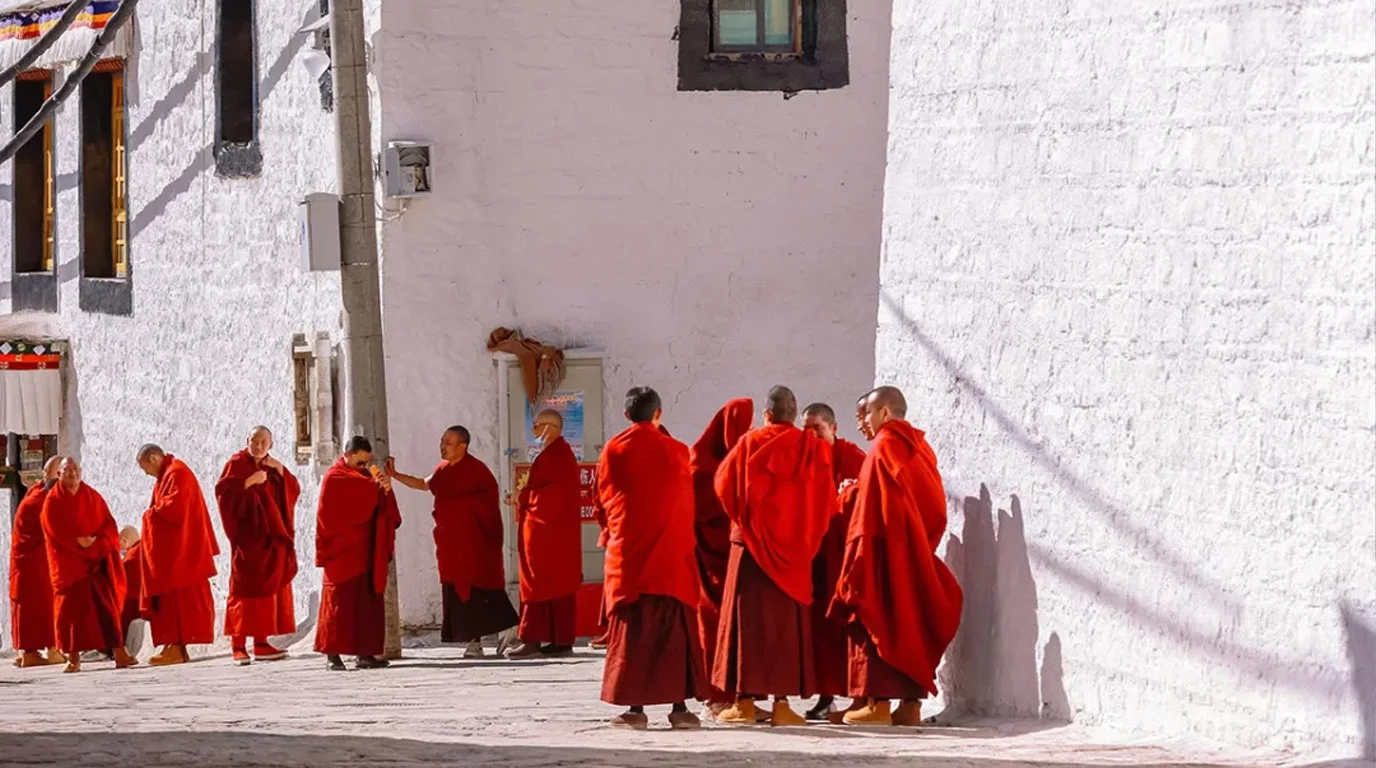
Paid photography permits: At certain monasteries (such as Tashilhunpo Monastery and Sakya Monastery), photography inside specific halls is allowed if a photography permit is purchased.
Places where photography is strictly prohibited
Main Assembly Hall: The main hall is the monastery's most sacred space where monks pray and conduct various rituals and ceremonies; photography is almost entirely prohibited, regardless of whether a flash is used.
Inner Sanctums and Shrines: Areas housing ancient thangkas, Buddha statues, and sacred relics; photography is strictly forbidden.
Protector Deity Chapels: Sites of extreme religious sensitivity; photography is completely prohibited.
During Rituals: Chanting, religious ceremonies, pilgrims performing full-body prostrations, or the offering of butter lamps—do not raise your camera during these moments.
Interior of the Potala Palace: Photography is strictly prohibited throughout.
Sky Burial Sites: Watching, photographing, or even discussing these sites is strictly forbidden; they are absolute no-go zones.
Three Golden Rules for Photographing People
Always ask before taking a photo of anyone. Smile, nod, and gesture toward your camera. If the person says "no," put your camera down; do not take a photo surreptitiously.
Do not photograph pilgrims performing full-body prostrations from directly in front. They are facing the Buddha in worship; standing in front of them with a camera blocking their view is highly disrespectful. If you truly wish to document the scene, do so from the side and at a distance, and obtain permission beforehand.
Do not offer money in exchange for permission to take a photo. Paying locals to take their picture is not an appropriate way to interact.
III. Donation: The sentiment matters more than the amount, and the method matters even more than the sentiment.
At Tibetan monasteries, a donation is neither the purchase of an admission ticket nor a commercial transaction; rather, it is a way for visitors to support the monastery's daily operations—such as butter lamps, offerings, and maintenance. It is entirely voluntary, and no one will ask you to donate.
How can I make a donation?
Donation boxes: There are usually several donation boxes inside the hall; you can donate small-denomination banknotes (1, 5, or 10 yuan). Any amount conveys your sincerity.
Offerings for Specific Rituals or Projects (Fixed Amounts): For rituals requiring the dedicated arrangement of monastics, involving a significant time commitment, or necessitating specific offerings, the temple typically provides an estimated reference price based on the scale of the ritual, the required offerings, and the stipends for the monastics.
Common Misconceptions About Donation
Thinking a donation is mandatory. It isn't; if you simply wish to visit quietly, that is perfectly fine.
Treating the donation as a "photography fee." Making a donation and obtaining permission to take photos are two separate matters. Do not try to use a donation to "buy" the right to take pictures.
Discussing the donation amount loudly in front of the offering box. Making a donation is a private matter; it is best done quietly.
IV. Other Important Guidelines for Visiting Temples
Move in a clockwise direction. Circling monasteries, stupas, prayer wheels, and mani stone piles must always be done clockwise; this is a core tradition of Tibetan Buddhism. The only exception is Bon monasteries (which are very rare and your guide will inform you in advance), where the direction is reversed.
Do not touch Buddha statues, scriptures, ritual implements, or offerings; avoid touching any religious objects with your hands.
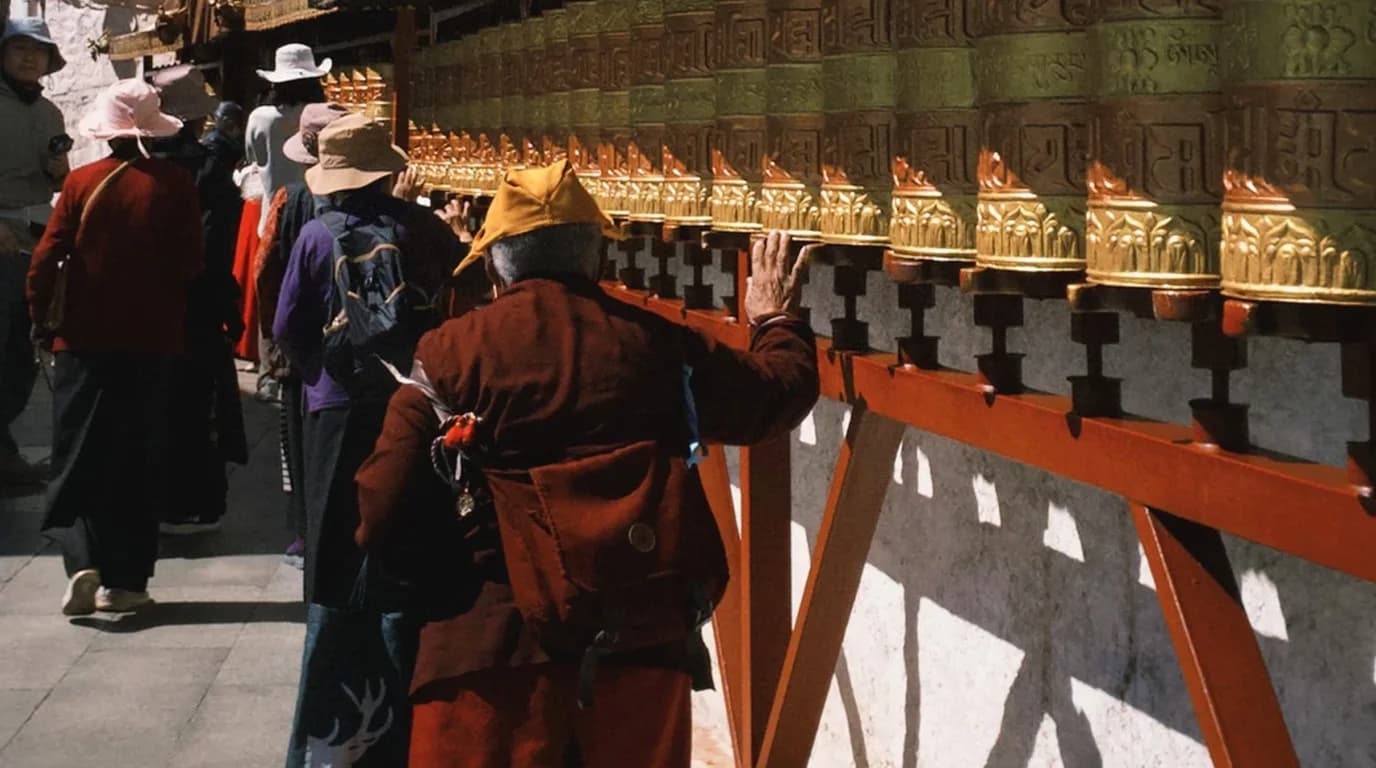
If you choose to spin a prayer wheel, use your right hand to complete a full rotation—pausing midway is considered inauspicious.
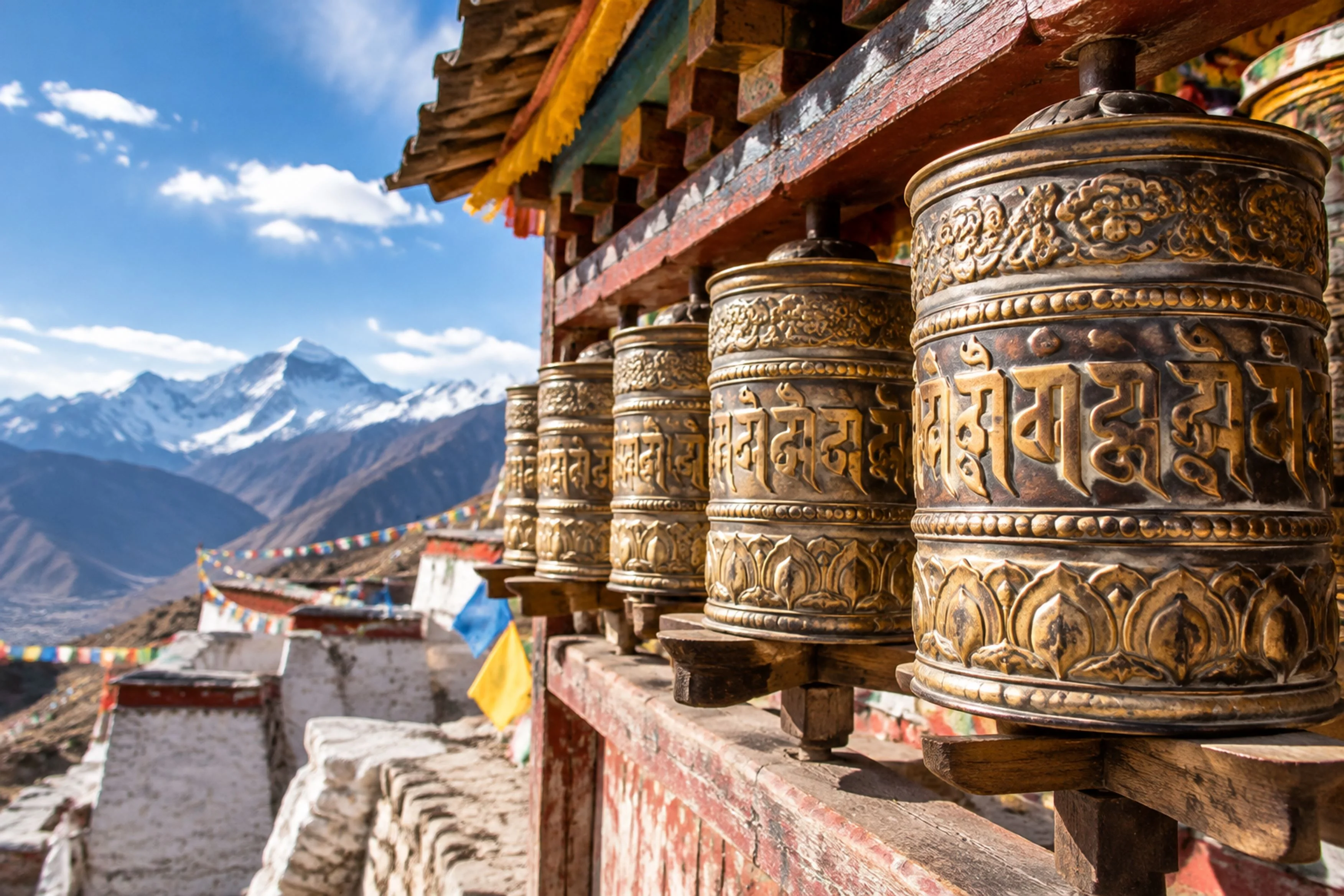
Walk alongside pilgrims rather than blocking their path. Make way for those performing full-body prostrations or circumambulating while turning prayer wheels.
Do not interrupt the ceremony. If you encounter a religious service or scripture chanting, stand quietly to the side or at the back to observe; do not move around or speak.
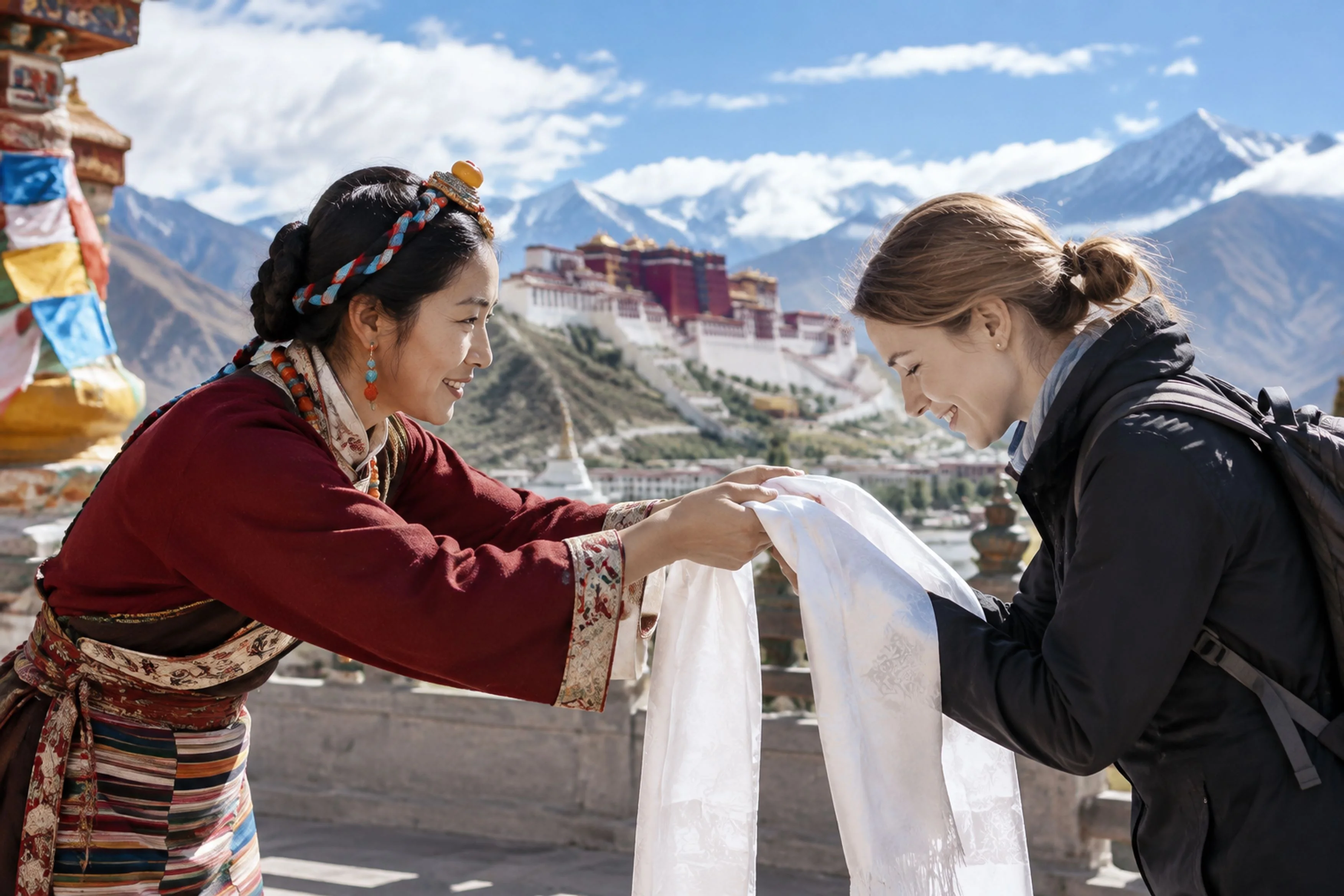
If you receive a white silk scarf, please accept it with both hands and drape it around your neck, or keep it as a cherished memento.
If you would like to know how international tourists can enter Tibet, please check:
Tibet Travel Permit: A Practical Guide to Eligibility, Documents and Entry Planning
Can Foreigners Travel to Tibet? What the Rules Mean
How to start planning
Send TibetGo your nationality, travel dates, first entry city and route idea before buying non-refundable transport. If you are undecided between a Lhasa introduction, an Everest itinerary, Mount Kailash or a Lhasa–Kathmandu overland trip, say so. The right answer may be to change the route before applying for documents.
You can begin through the [custom Tibet tour planning page](/custom-tour) or the [contact page](/contact). For current route options, compare the [Tibet tour collection](/tours) and the related permit guide before sending your documents.