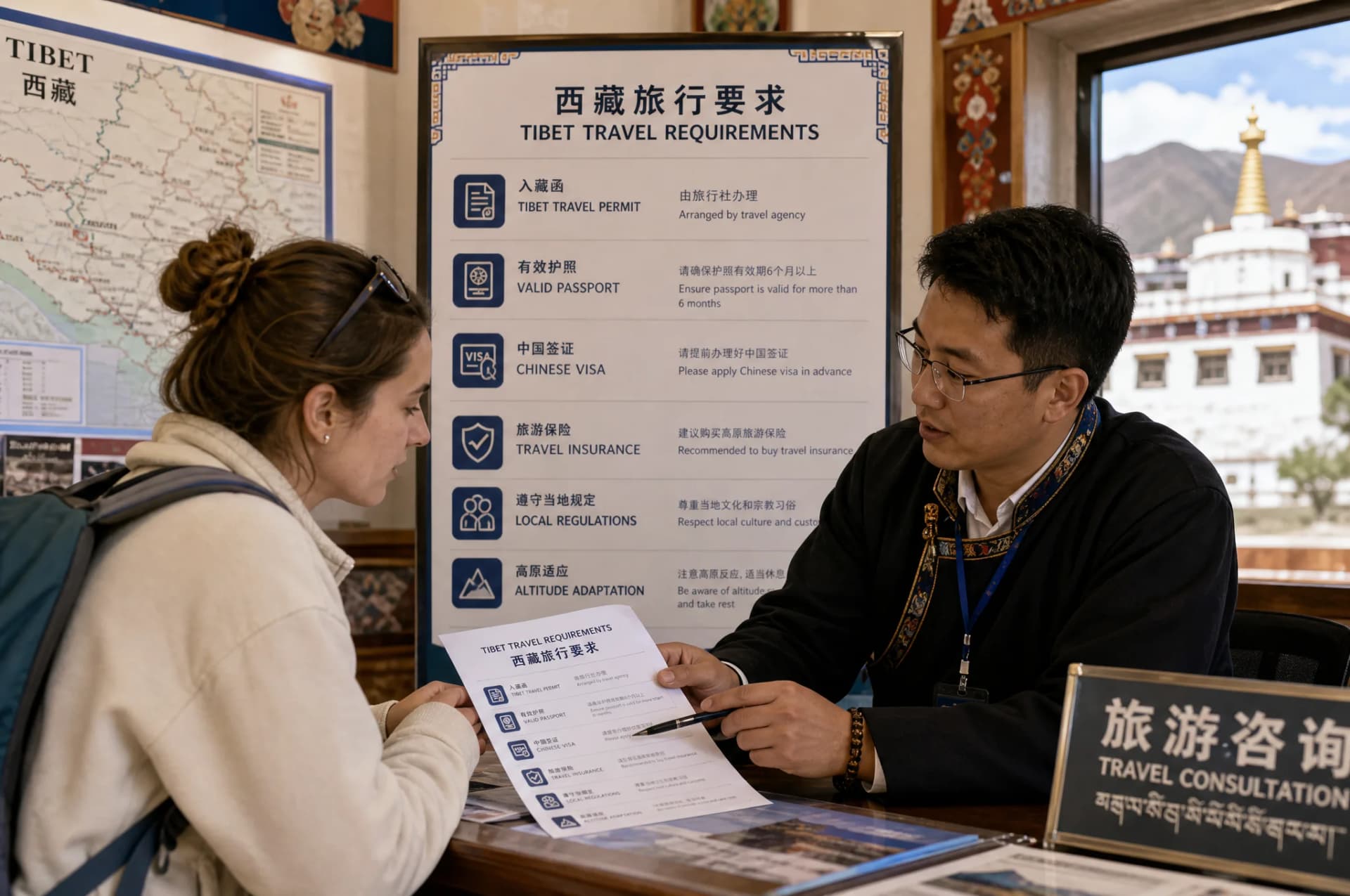
Can Foreigners Travel to Tibet? What the Rules Mean
Learn how nationality, visas, permits, entry cities and organized routes affect international visitors planning a Tibet trip.
TibetGo Team
Travel Expert
Yes, foreigners can travel to Tibet. The practical question is not simply whether Tibet is open to international visitors. It is whether your passport, entry status, travel dates, first entry city and proposed route can be arranged under the current rules.
Tibet is not a destination where most foreign visitors can book a hotel, hire an unrelated car and change their route freely after arrival. A qualified local operator normally coordinates the itinerary, transport, accommodation, guide services and the documents connected to the journey.
This guide explains what international travelers should check before booking flights or trains. It is written as a planning resource, not as a permanent legal summary. Requirements can change by nationality, visa category, season, border area and administrative decision, so confirm the current details for your own trip.
Can foreigners visit Tibet independently?
For most international visitors, Tibet travel needs to be arranged through an authorized local travel operator. The operator submits or coordinates the required travel documents and builds an itinerary that matches the transport and access rules for the route.
Organized travel does not mean that every visitor has to join a large coach group. Depending on availability and the current rules, travelers may discuss a private trip, a small group, a slower pace, photography stops, preferred hotels and a route that combines Tibet with Nepal or other parts of China.
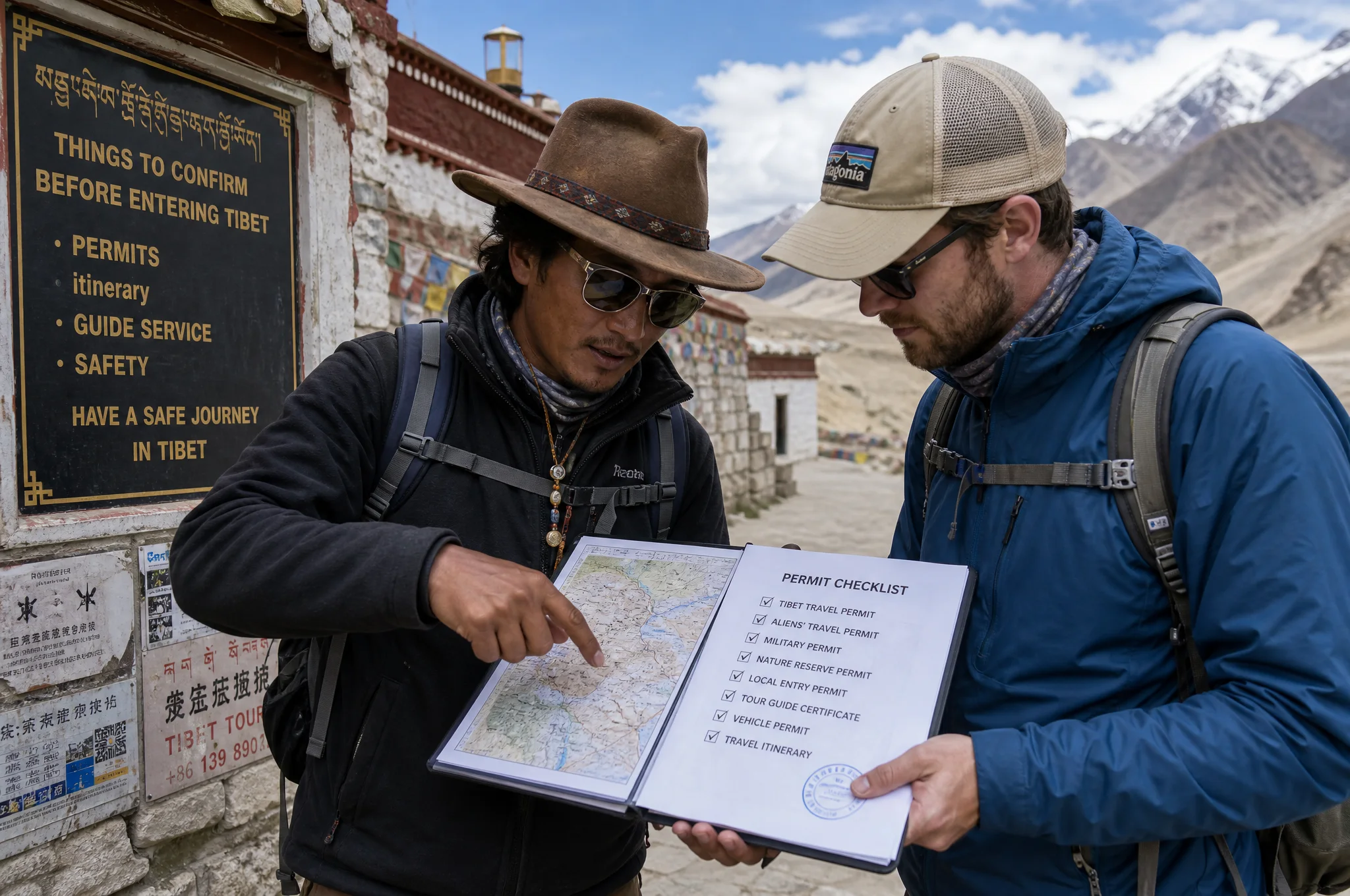
The important boundary is coordination. Your guide, vehicle, hotel sequence and restricted-area visits may be connected to the approved itinerary. Receiving a permit does not automatically mean that you can replace the vehicle, change the hotel or add a border destination on your own.
Who is included in “foreign travelers”?
In practical planning, a foreign traveler is usually someone traveling on a non-Chinese passport. This includes overseas Chinese citizens who hold foreign passports. Travelers from Taiwan may have a separate document process, while Hong Kong and Macao residents and mainland Chinese residents follow different entry arrangements.
Journalists, diplomats and visitors traveling for non-tourist purposes should not assume that the ordinary tourist route applies to them. Work, study, business, family and private-affairs visas may require supporting documents in addition to the passport and visa pages.
Foreign passport holders: Whether traveling independently or as part of a tour group, foreign tourists entering Tibet must obtain a "Tibet Entry Permit" approved and issued by the Tibet Autonomous Region Tourism Bureau.
Taiwanese travelers: Must hold a Mainland Travel Permit for Taiwan Residents (often referred to as a "Tai-Bao-Zheng") and arrange a specific "Tibet Entry Permit for Taiwan Tourists" through a mainland travel agency; the application process differs from that for foreign tourists.
See also:Tibet Travel Permit: A Practical Guide to Eligibility, Documents and Entry Planning
Hong Kong and Macau residents: Holders of the Mainland Travel Permit for Hong Kong and Macao Residents (commonly known as the "Home Return Permit") may follow the same procedures as mainland residents; generally, no Tibet Entry Permit is required.
Mainland Chinese residents: Follow standard domestic travel regulations; the guidelines for foreign tourists do not apply.
Journalists, diplomats, or travelers with special status: Please verify the correct special application channels prior to booking.
Does a China visa allow entry to Tibet?
No. A Chinese visa and a Tibet Travel Permit answer different questions.
Your Chinese visa or other entry arrangement concerns entry into mainland China. The Tibet Travel Permit is connected to organized travel and access to the Tibet Autonomous Region. Some nationalities may be eligible for a current visa-free entry arrangement, but visa-free China entry should not be interpreted as independent access to Tibet.
Travelers holding work, study, business, family or private-affairs visas may need supporting evidence from a host, employer, school or family member in mainland China. The supporting documents accepted for a Chinese visa application are not automatically the same as those required for a Tibet itinerary.
If your passport or visa is being renewed, tell the operator before sending the final application. A replacement passport, an expired visa or a name mismatch can delay the document process.
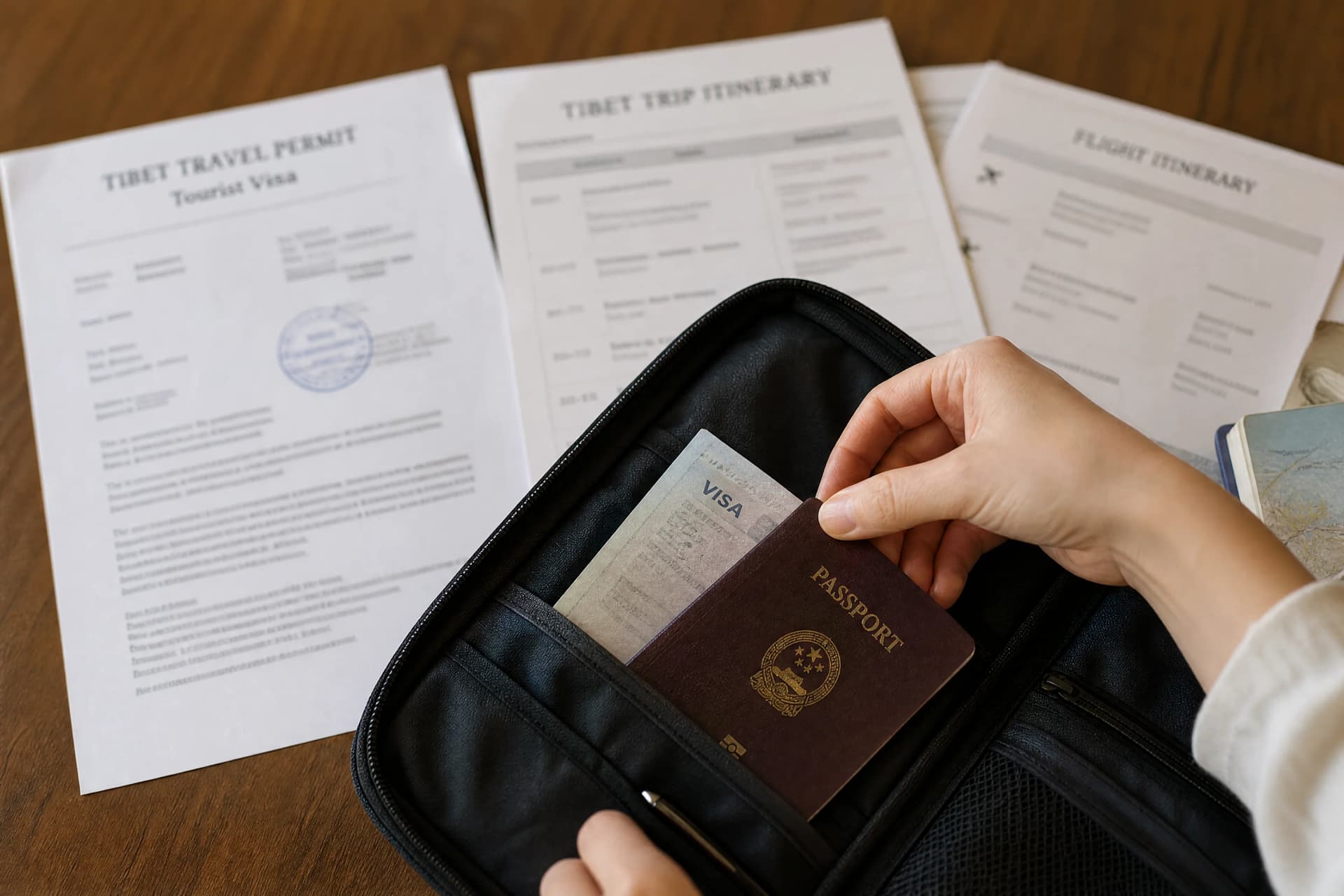
Passport, China visa and Tibet Travel Permit documents for an international visitor.
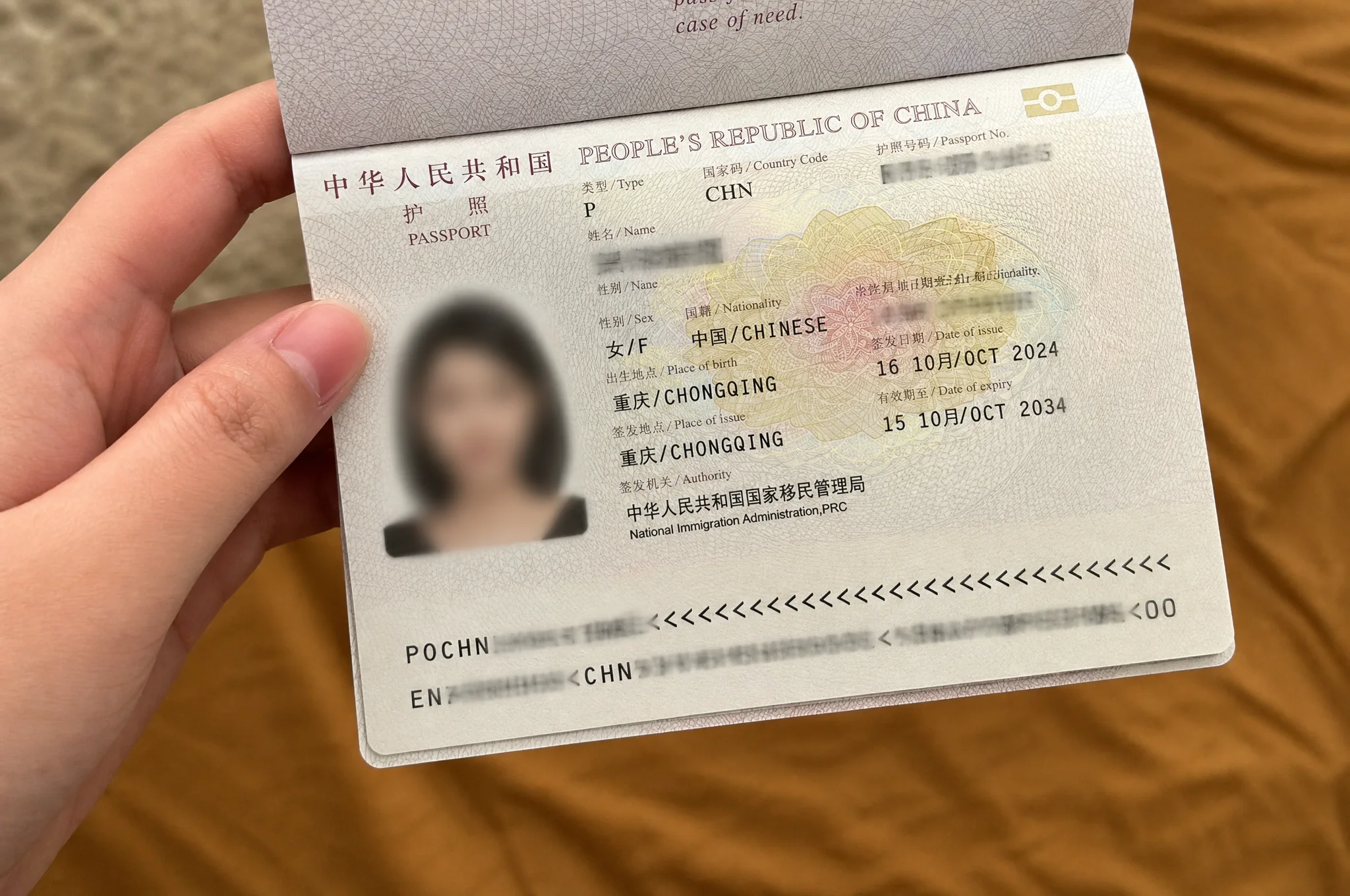
Chinese passport
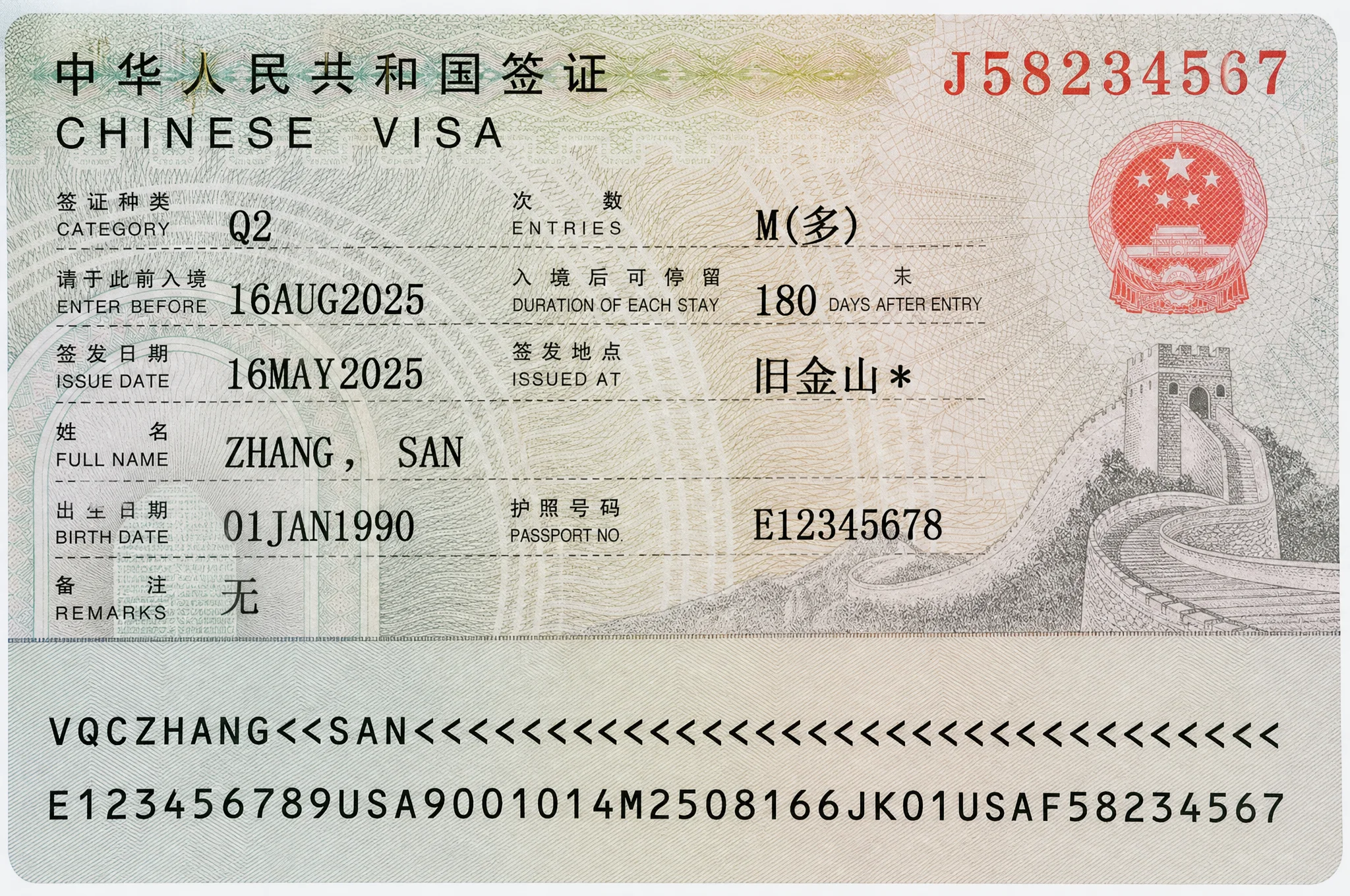
Chinese Visa
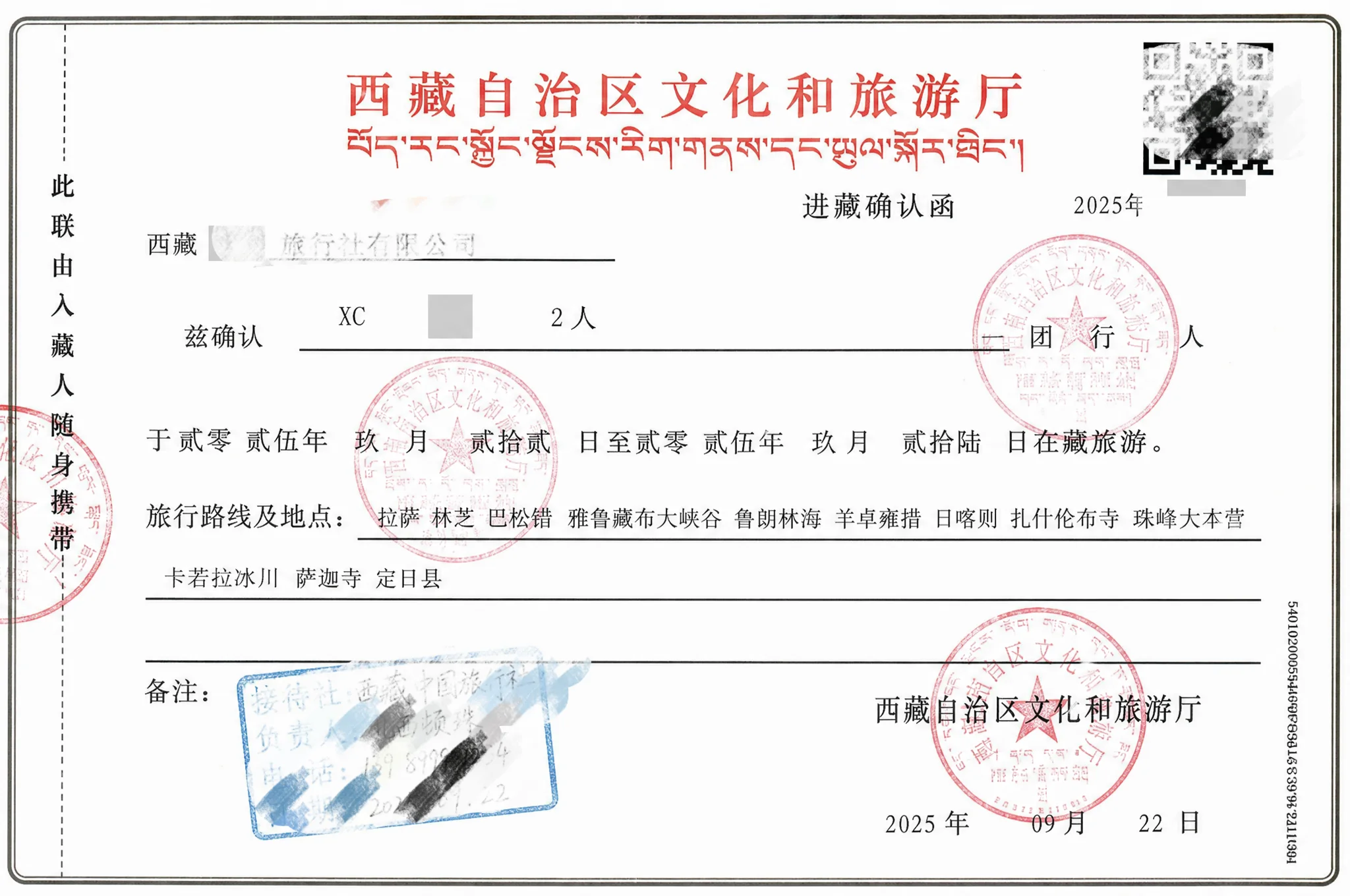
Tibet Travel Permit
What should you tell a Tibet travel operator?
The fastest way to get a useful answer is to send a complete first inquiry. Include:
your nationality and passport type;
your current country of residence;
passport expiry date;
Chinese visa or entry arrangement;
preferred travel dates and trip length;
first entry city, such as Lhasa or Nyingchi;
destinations you want to visit;
whether you plan to continue to Nepal;
private or small-group preference;
any mobility, dietary or altitude concerns.
Also say whether you have already purchased a flight or train ticket. If the first entry city or travel date is connected to the document application, changing it later may be difficult.
Why does the first entry city matter?
Many travelers think of the entry city as a simple transport choice. For an international Tibet trip, it may be part of the approved route file. Lhasa is the most common starting point, but some itineraries may begin through another city depending on current transport and access arrangements.
Before submitting documents, ask whether the entry city can change. Do not change a flight or train after submission without written confirmation from the operator. A change can affect the document file, hotel sequence, vehicle plan and delivery instructions.
Can foreigners travel to Everest Base Camp?
Foreign visitors can often plan a Tibet-side Everest Base Camp journey through an organized route, subject to current permits and access conditions. The route usually involves several nights in Lhasa before traveling through Yamdrok Lake, Gyantse or Shigatse toward the Everest region.
The Everest route is not just a sightseeing extension. It involves higher sleeping altitudes, long driving days, colder nights and additional border or area permissions. Ask the operator which route is currently approved, which documents are required and what happens if weather or road conditions prevent the planned viewpoint.
Can foreigners visit Mount Kailash?
Mount Kailash is also planned as a coordinated route. A Kailash journey can include western Tibet, Lake Manasarovar, the three-day kora and remote road sections. The route requires more preparation than a short Lhasa itinerary because of distance, sleeping altitude, limited services and physical demands.
Ask which permissions cover the route, whether the kora is included, what accommodation is available, whether a porter or yak can be arranged and what the contingency plan is if a road or pass is closed.
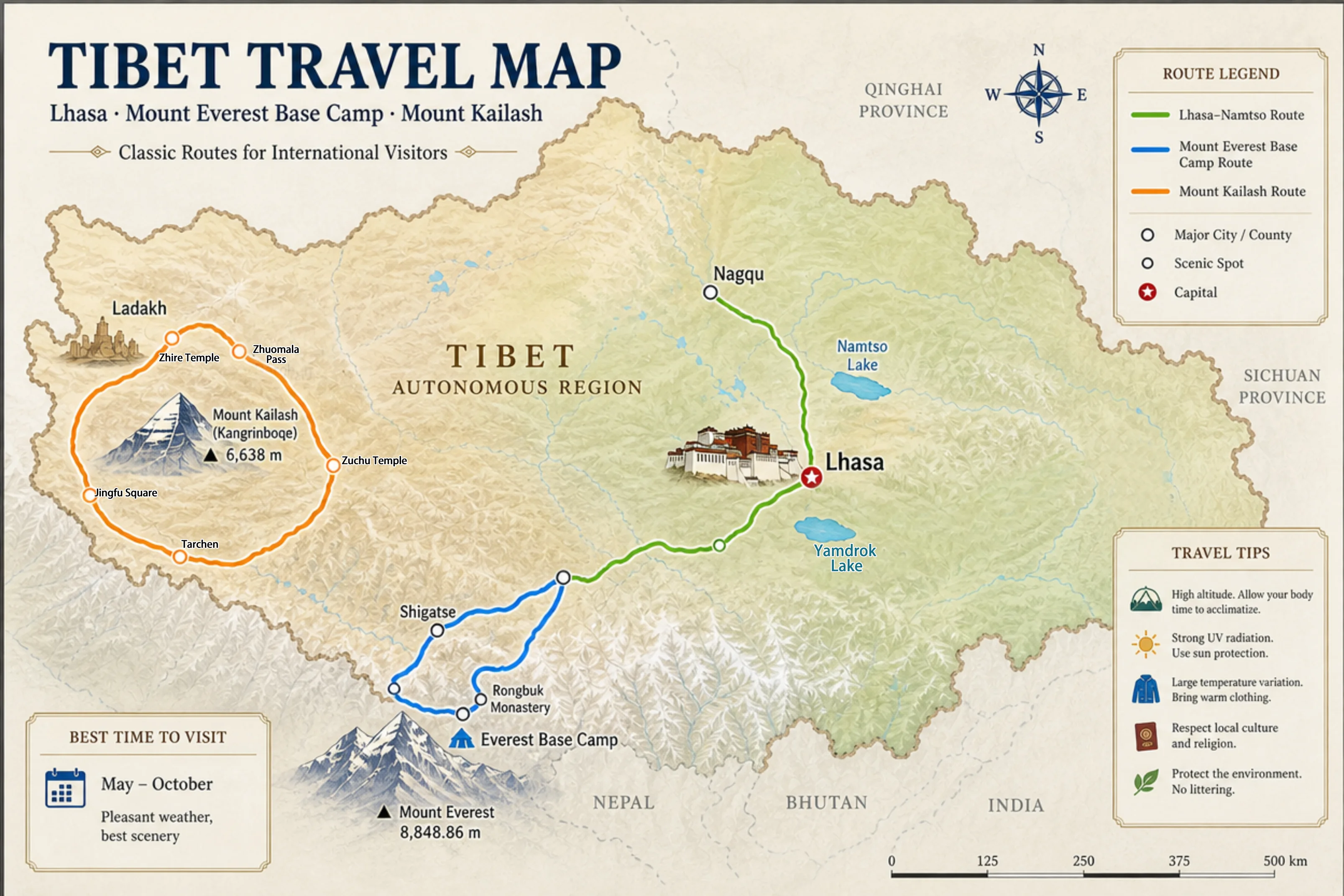
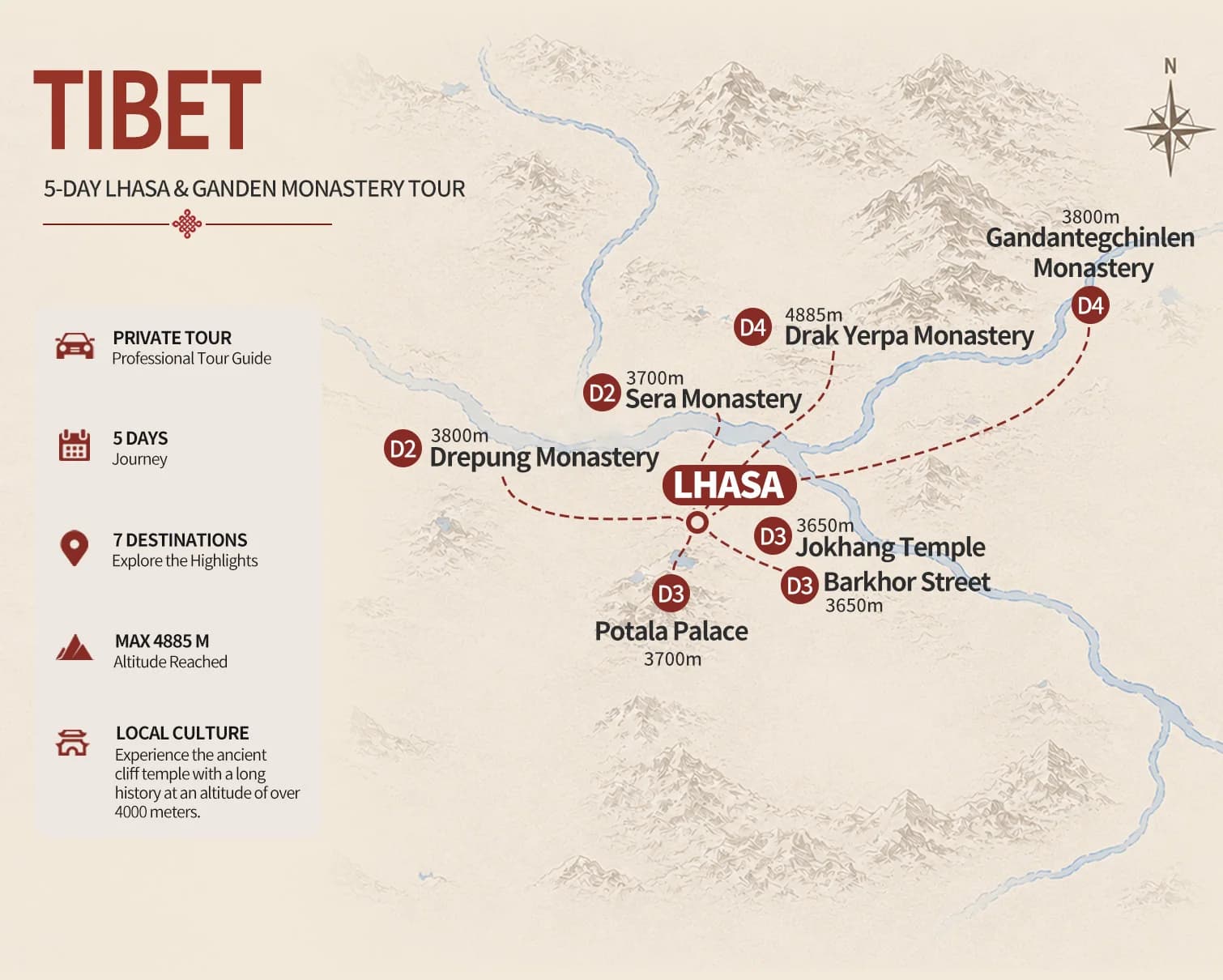
Tibet map showing Lhasa, Everest Base Camp and Mount Kailash routes for international travelers.
Can foreigners travel from Tibet to Nepal by road?
The Lhasa–Kathmandu overland route is possible only when the current border and transport arrangements allow it. The route usually involves Tibet permits, a journey through the Everest region or Shigatse, the Kyirong border and a separate Nepal entry plan.
Before booking, confirm:
1. where your China trip ends;
2. who handles the Tibet-side transfer;
3. how you cross and continue from the border;
4. what Nepal visa arrangement applies;
5. whether you need an open-jaw international flight.
Do not assume that leaving Tibet for Nepal is the same as returning to mainland China. Your onward route should be decided before the permit application is finalized.
What does “current rules” really mean?
Information regarding travel to Tibet changes frequently. When researching the subject, you might find an article published years ago ranking high in search results; however, the details it provides—such as permit application procedures, border crossings, or tour itineraries—may well be outdated or no longer applicable to foreign tourists.
When reviewing information, please pay attention to the publication or update date and verify whether the author is describing current operational procedures. A responsible travel service provider should clearly indicate which details require further confirmation, rather than presenting all regulations as fixed, unchanging rules.
For your own trip, verify:
passport and visa eligibility;
Tibet Travel Permit requirements;
first entry city;
original-document rules for air or rail;
Everest, Kailash or border permissions;
road and attraction opening conditions;
cancellation and non-refundable charges; and
emergency contact arrangements.
Common mistakes made by first-time foreign visitors
Booking transport too early
A cheap flight is not useful if the route or document process has not been confirmed. Check the itinerary first, especially for border and high-altitude routes.
Assuming every nationality follows the same process
Passport, visa, residence and travel date can change the document checklist. Do not copy another traveler’s process without checking your own.
Treating the permit as a free-travel pass
The permit belongs to a coordinated route. Contact the operator before changing hotels, vehicles or destinations.
Choosing a route before considering altitude
A short Lhasa visit and a Mount Kailash kora are not interchangeable travel products. Build in realistic acclimatization and ask for the sleeping-altitude profile.
Trusting old forum answers
Use older discussions to understand common questions, not to confirm current rules. Look for a current operator check and a stated review date.
Is Tibet suitable for every foreign traveler?
Tibet may suit travelers who are comfortable with organized logistics, high altitude, changing weather and long road sections. It may not suit someone who needs a fully independent itinerary, guaranteed access to every remote location or a fixed schedule with no room for route changes.
Families, older travelers, photographers, pilgrims and travelers with limited time may all need different route designs. A custom inquiry is useful when your group has different fitness levels, dietary needs, mobility concerns or a specific entry and exit plan.
How to start planning
Send TibetGo your nationality, travel dates, first entry city and route idea before buying non-refundable transport. If you are undecided between a Lhasa introduction, an Everest itinerary, Mount Kailash or a Lhasa–Kathmandu overland trip, say so. The right answer may be to change the route before applying for documents.
You can begin through the [custom Tibet tour planning page](/custom-tour) or the [contact page](/contact). For current route options, compare the [Tibet tour collection](/tours) and the related permit guide before sending your documents.
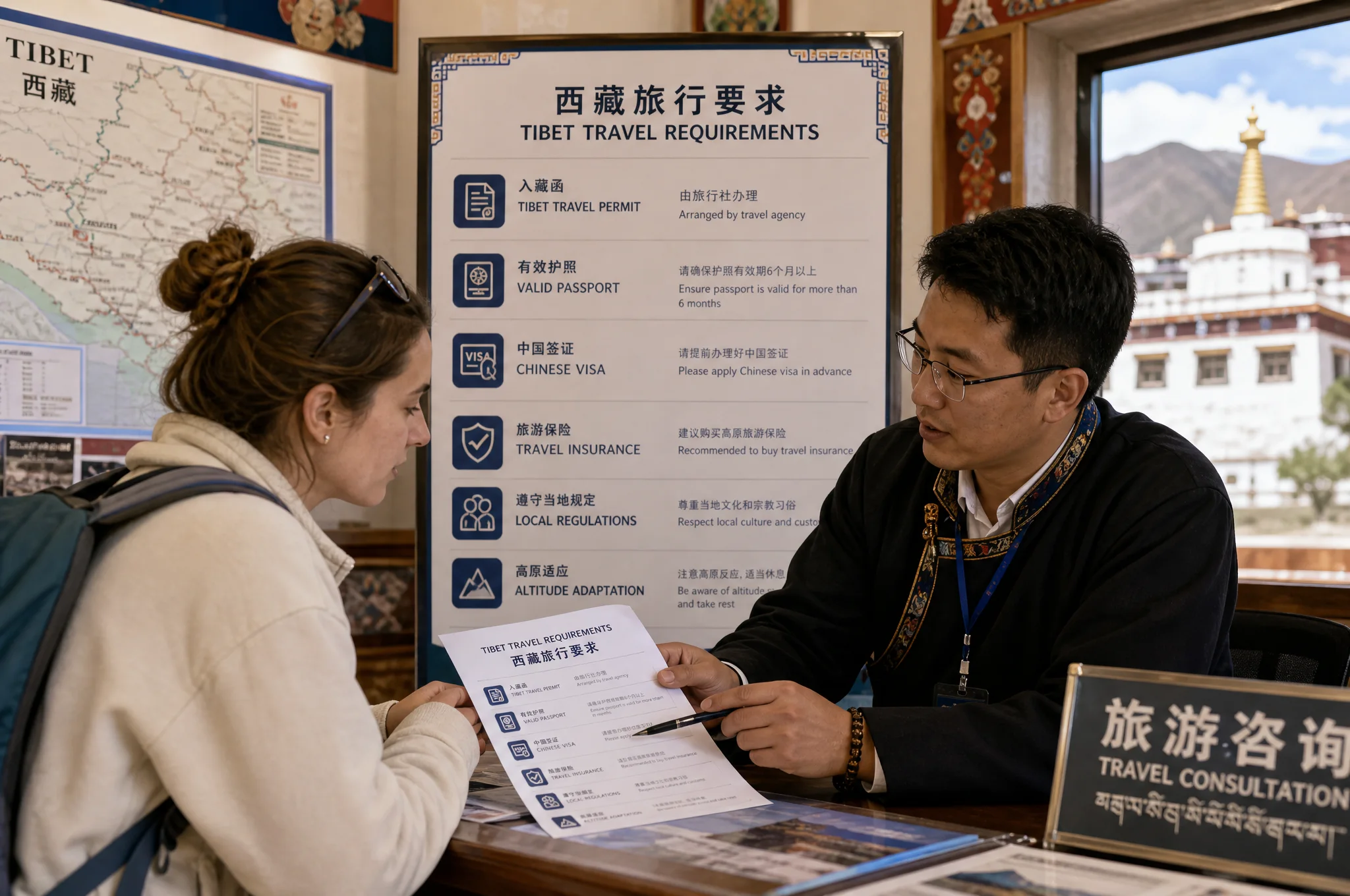
> Travel notice: Tibet permit, visa, border, transport, health and route-access rules may change. This article is planning information, not legal or medical advice. Confirm the current requirements for your nationality and itinerary before travel.