Tibet Travel Permit: A Practical Guide to Eligibility, Documents and Entry Planning
Plan a Tibet Travel Permit with practical guidance on eligibility, visa documents, application timing, original-document travel, border permits and route restrictions.
TibetGo Team
Travel Expert
If you are planning Tibet for the first time, the permit is usually not the first thing you should buy. The first thing you should do is check whether your passport, entry status, dates and proposed route can be arranged together.
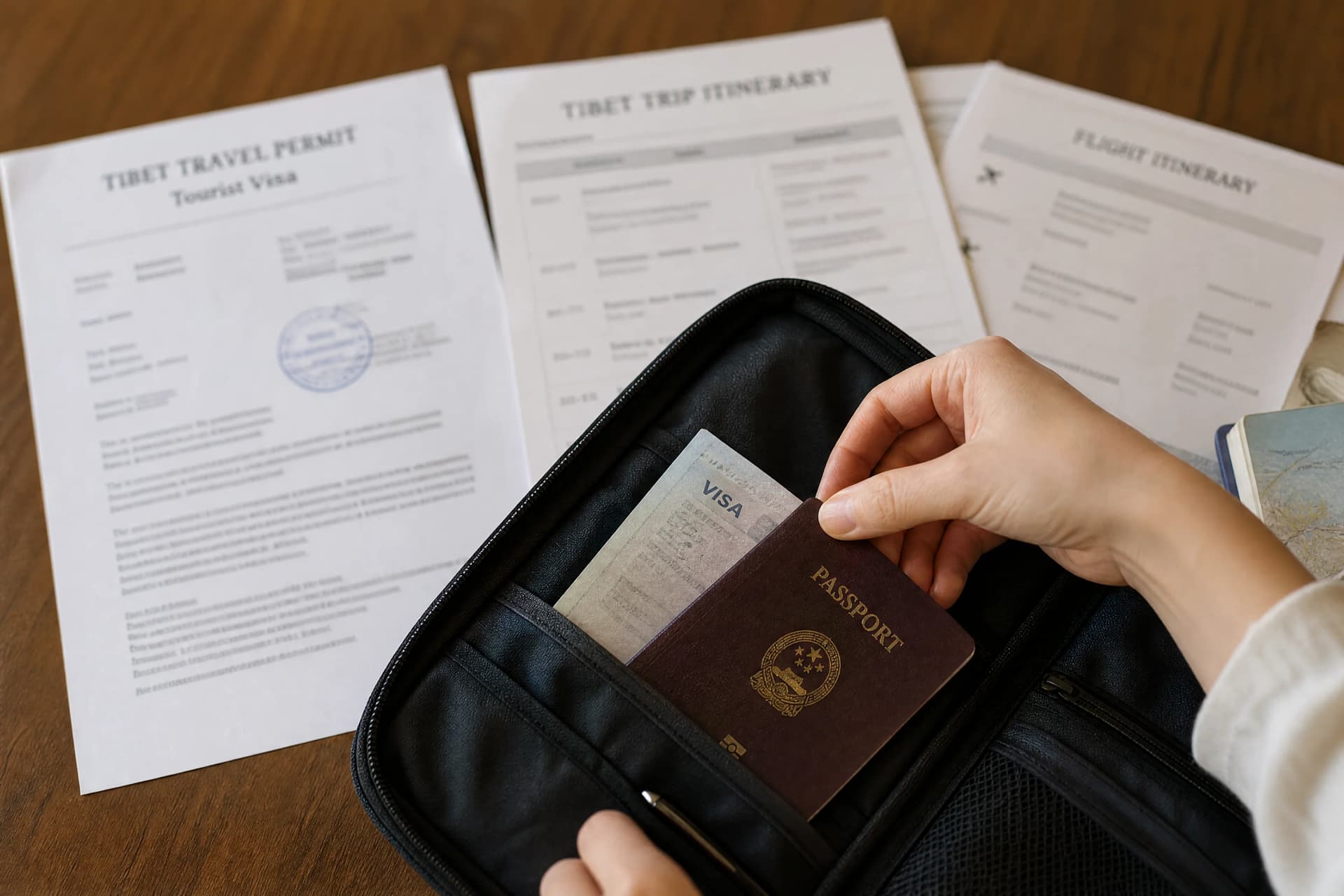
For most international tourists, a trip to Tibet is typically arranged by a qualified local travel agency. The agency handles the coordination of itineraries, tour guides, vehicles, and accommodation, as well as the various permits required for the journey—including the "Tibet Travel Permit" (often referred to as the "Tibet Entry Permit"). While this permit authorizes entry into Tibet, it does not replace a passport or Chinese visa; nor does it grant tourists the freedom to change hotels at will or travel to remote valleys once they have arrived.
The details below are written for travelers who want to understand the process before sending documents or paying for transport. They combine the operating details available to TibetGo with the questions that repeatedly appear in professional Tibet travel planning. The final requirement must always be checked against your nationality, visa type, first entry city, travel dates and destinations.
What Is the Tibet Travel Permit?
The document is commonly described in English as the Tibet Travel Permit or Tibet entry permit. It is an official travel authorization connected to a foreign visitor's approved Tibet itinerary. Airlines, railway staff, transport checkpoints and local authorities may require it at different stages of the journey.
Three points are easy to miss:
The permit does not replace a passport.
The permit does not automatically replace a Chinese visa or other entry document.
The permit does not automatically authorize an unrelated vehicle, hotel or restricted-area visit.
In practice, the permit works as part of a route file. The file can include your identity documents, visa or entry status, first entry city, itinerary, hotels, vehicles, guide services and additional permissions for border or high-altitude destinations.
That is why a serious operator will ask questions before quoting a price. If someone asks for a payment without checking your passport type, visa status and route, you still do not know whether the proposed arrangement fits your trip.
Who Needs a Tibet Travel Permit?
Who needs to obtain travel permits for Tibet?
The following information is for planning purposes only and does not replace the need to verify requirements based on your specific circumstances.
Foreign nationals holding foreign passports—including holders of Chinese permanent residence permits ("green cards") or work/study visas (e.g., foreign tourists).
Individuals who do not hold a Chinese Resident Identity Card (e.g., tourists from Taiwan).
Individuals who have acquired foreign citizenship and do not hold a Chinese passport or Resident Identity Card are treated as foreign tourists (e.g., overseas Chinese).
Notes:
Tourists from mainland China, Hong Kong, and Macau do not need a Tibet Travel Permit; they can visit Tibet using their Resident Identity Card or Mainland Travel Permit for Hong Kong and Macau Residents.
If you are a diplomat, journalist, or government official, you cannot obtain a Tibet Travel Permit through a travel agency; your visit must be arranged by the Tibet Foreign Affairs Office.
China Visa and Tibet Permit: Two Different Questions
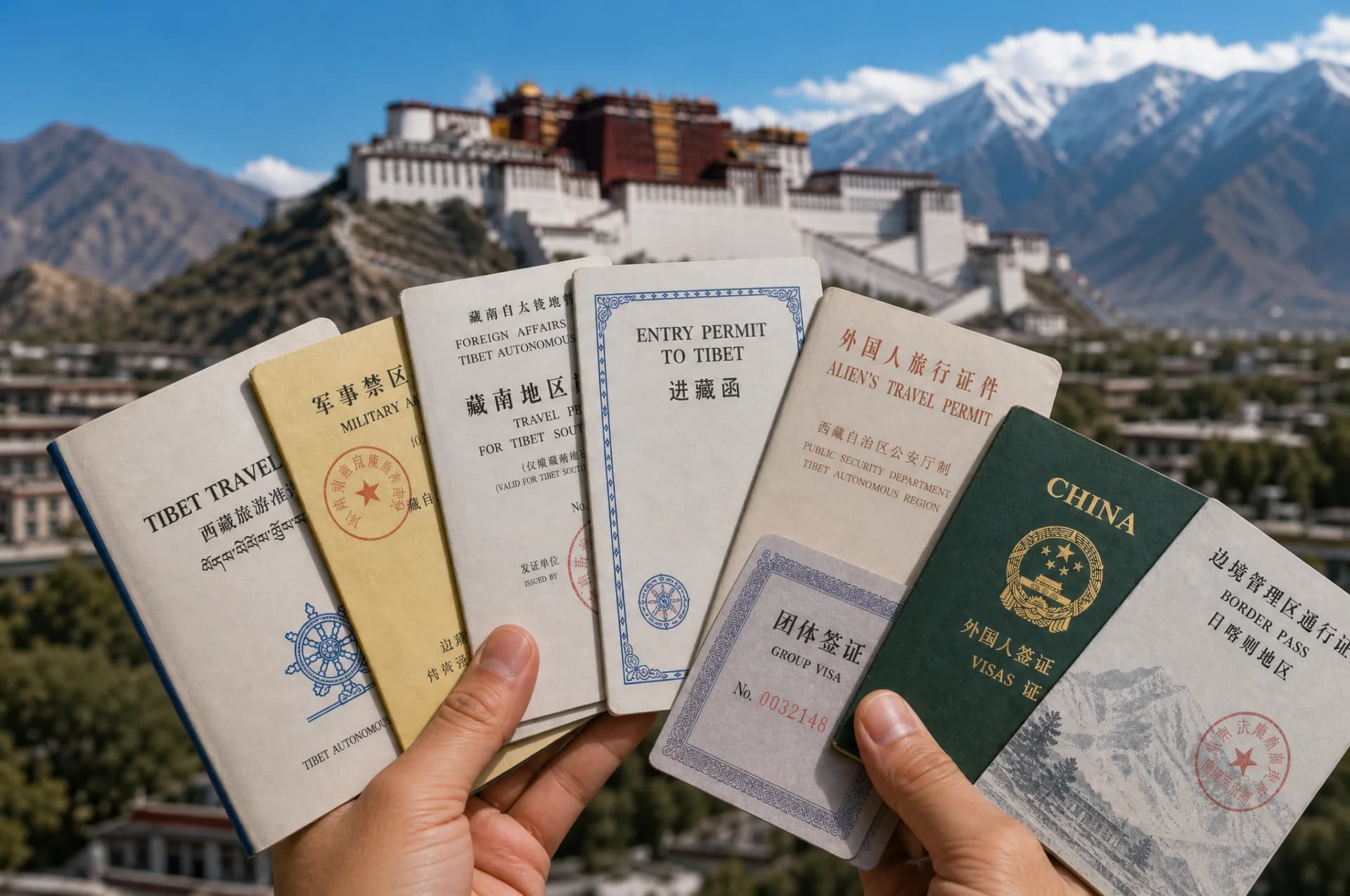
Your Chinese visa or other entry arrangement concerns entry into mainland China. The Tibet Travel Permit concerns the organized access and travel process for the Tibet Autonomous Region. One document does not automatically cancel the need for the other.
Tourist visa holders
Travelers entering China for tourism may have a relatively simple supporting file: a passport scan, valid visa information and the proposed route. The operator will still need to check the current process and the route-specific requirements.
Family, private-affairs, work, study and business visa holders
Additional documentation is required for these non-tourist visa categories. Depending on current regulations from the relevant authorities, travelers may need to provide supporting documents from relatives, hosts, employers, schools, or other responsible entities in mainland China.
Do not assume that a document accepted for the Chinese visa application is automatically sufficient for a Tibet itinerary. Send the complete situation to the operator and wait for confirmation.
Visa-free entry
Visa-free entry policies change by nationality and date. A traveler who enters China without a conventional tourist visa may still need the Tibet Travel Permit and a separate route arrangement. Do not interpret “visa-free China entry” as “free independent access to Tibet.”
Continuing to Nepal
If you plan to leave Tibet through Kyirong and continue to Kathmandu, the China entry plan, Tibet documents, border transfer, Nepal visa and international flights should be considered together. Leaving China can affect whether you can return under the same arrangement.
[Image Placeholder: China visa and Tibet permit comparison graphic. Suggested alt: Comparison of China visa, Tibet Travel Permit and Nepal border documents.]
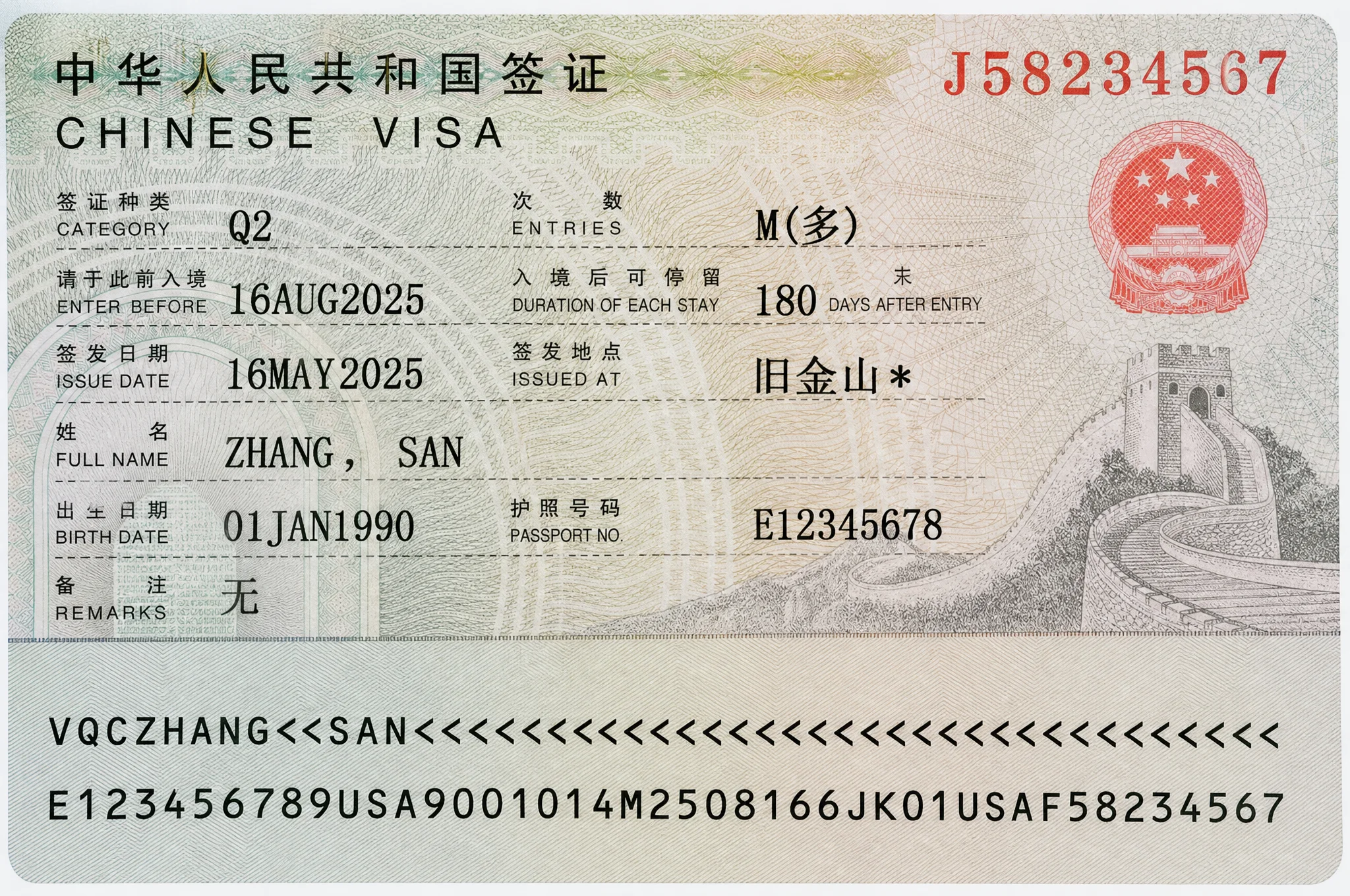
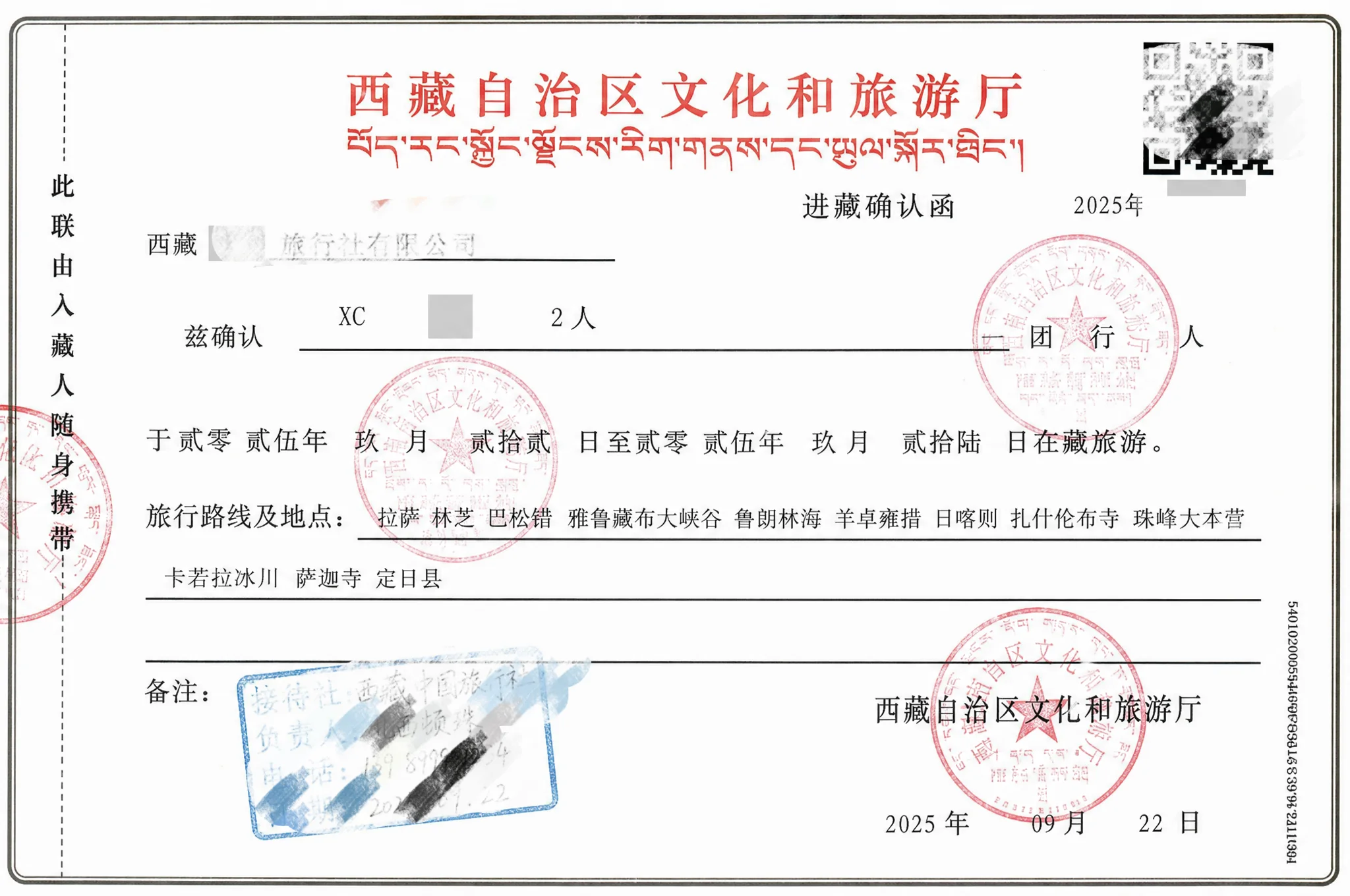
Documents for Foreign Visitors
Core documents
Prepare clear, colour scans of:
the passport information page;
the passport validity information;
the valid Chinese visa or applicable entry document;
your nationality and current country of residence;
your proposed dates and first entry city;
your proposed destinations and route order.
The operator may ask for additional information if your route enters a border area, a high-altitude destination or a region with special access rules.
The internal reference recommends that a passport remain valid for at least six months after the trip. This is an operational requirement that must be reconfirmed before publication because passport rules can vary by process and date.
Visa-specific supporting documents
The internal reference describes the following working distinctions:
L Tourist Visa: Passport and visa page required; specific requirements are subject to the latest regulations at the time of verification.
Q1/Q2 (Family Visit) or S1/S2 (Private Affairs) Visas: Supporting documents from relatives, hosts, or designated contacts in mainland China may be required to verify the authenticity of the visit or private matter.
Z (Work), X (Study), or M (Business) Visas: Confirmation of employment from the employer, confirmation of enrollment from the school, or confirmation documents related to business activities may be required.
Visa-free Entry: A valid passport and relevant entry records are required; specific eligibility depends on nationality-based policies in effect at the time.
These are planning categories, not a promise that every traveler will receive the same checklist. If a passport or visa is being renewed, submit the new document information and any official replacement receipt requested by the operator.
Travelers from Taiwan
Internal records distinguish between travelers residing in mainland China and those residing in Taiwan. Required documentation may include:
Color scans of the front and back of the "Mainland Travel Permit for Taiwan Residents" (Taiwan Compatriot Permit);
For travelers residing in mainland China: a Mainland Residence Permit or proof of employment;
Proof of employment must include the company's landline number (if requested);
A mobile contact number;
For travelers arranging their itinerary from Taiwan: a signed travel contract.
Older travelers and health documents
Internal guidelines regarding travel to Tibet outline additional health certification requirements for older travelers.
Ages 60–64: A specialized hospital medical report is generally not required; however, when traveling with a tour group, travelers are usually asked to sign a "Health and Safety Liability Waiver for Older Travelers" (an indemnity agreement).
Ages 65–69: Proof of health is mandatory. When applying for special travel permits or joining a tour group, travelers must submit a medical examination report or a statement confirming their fitness to travel, issued by a recognized hospital within the past 1 to 3 months.
Ages 70–79: A detailed medical examination report is compulsory. In addition to a hospital-issued health certificate, some organizations and travel agencies enforce strict limits regarding specific physiological indicators. Travel must be accompanied by an immediate family member.
Ages 80 and above: Due to the extreme risks posed by high-altitude hypoxia to the cardiopulmonary function of the elderly, such travelers are generally not accepted, and travel agencies often struggle to secure approval for their entry into Tibet.
While travel agencies can explain the operational requirements, only qualified medical professionals can assess whether a traveler is fit for high-altitude travel.
Step-by-Step Application Process for Visiting Tibet
1. Send a complete first inquiry
Include your nationality, passport type, country of residence, visa status, preferred dates, first entry city, destinations, group size and onward travel. Mention if you have already purchased a flight or train ticket.
2. Check the route before paying for transport
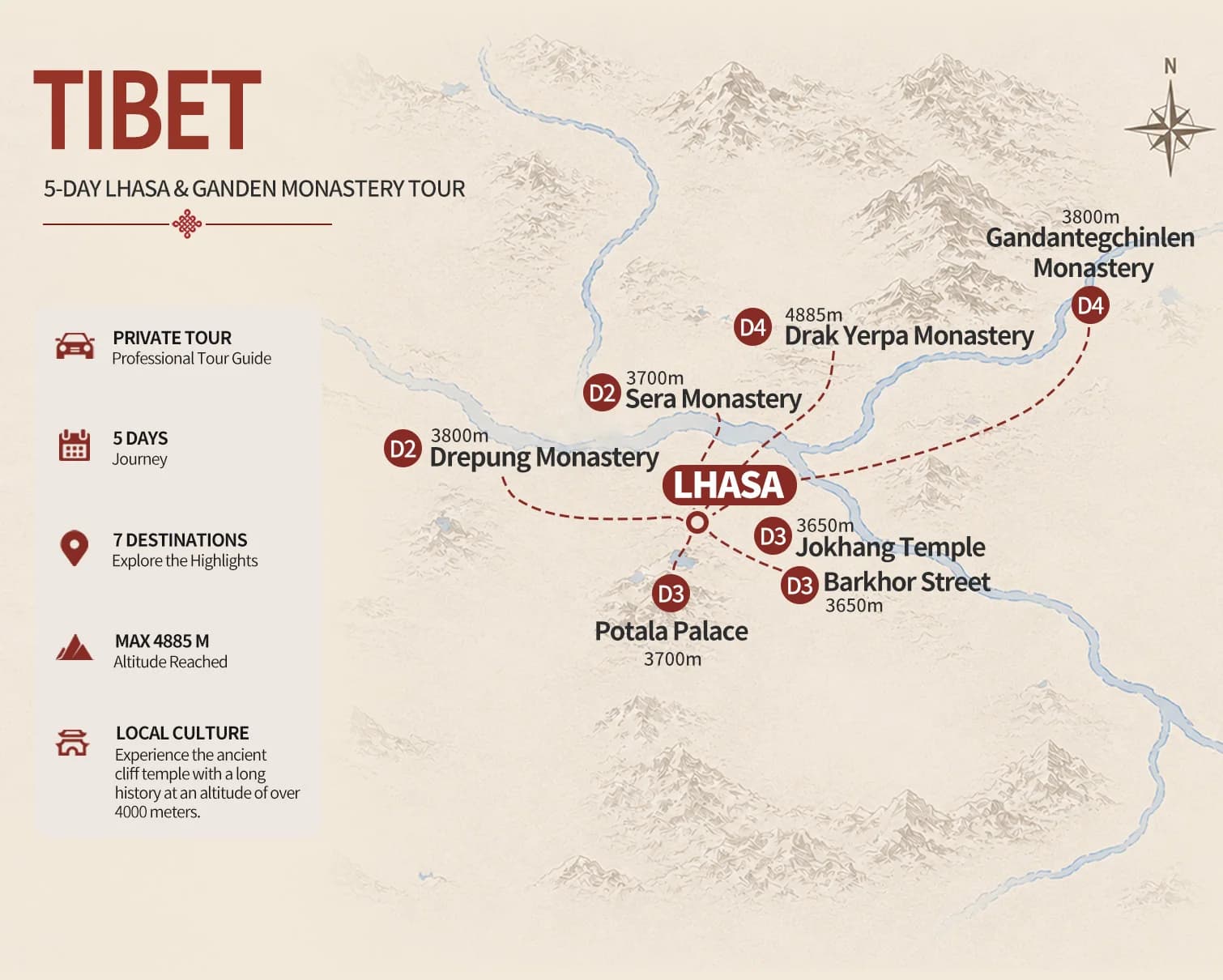
The operator should check whether the route is open and whether the chosen entry city fits the application. This is the point to decide between a Lhasa introduction, an Everest route, a Mount Kailash journey or a Tibet–Nepal overland trip.
3. Confirm your document file
Ask which passport, visa and supporting documents are required for your exact situation. Send clear scans through a secure channel. Keep your own copy of everything submitted.
4. Fix the first entry city
The Tibet Travel Permit will clearly specify the cities and modes of transport for entering and exiting Tibet. Once approved, the itinerary (including the entry city) should not be changed arbitrarily.
5. Finalize the service quotation
Review permit handling, guide, vehicle, hotels, meals, entrance tickets, oxygen support where applicable, border transfer and document delivery. Ask which charges become non-refundable after submission or booking.
6. Submit the application through the local operator
International visitor applications are normally handled through an appropriately qualified local Tibet travel agency. Ask who is responsible for collecting documents, submitting the file and communicating changes.
7. Receive the document and follow transport instructions
The internal reference states that the original document may be needed for air or rail travel. Ask the operator exactly what is required for your entry method, how the original will be delivered and what to do if it has not arrived before departure.
8. Keep the approved plan unchanged
Do not independently change your hotel, vehicle, route order or restricted-area visits. Contact the operator first. A change that looks small on a booking screen can affect the permit file and local permissions.
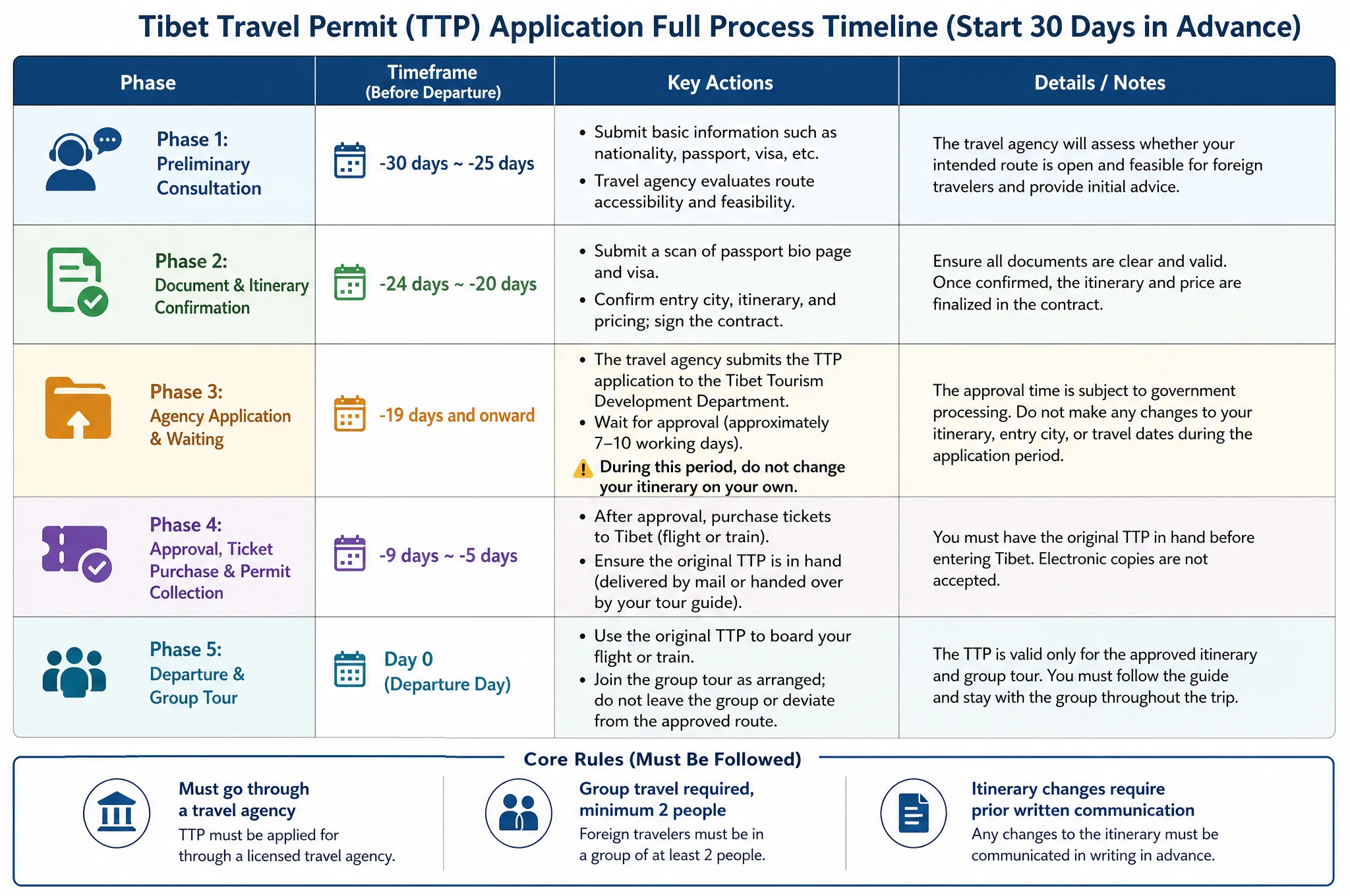
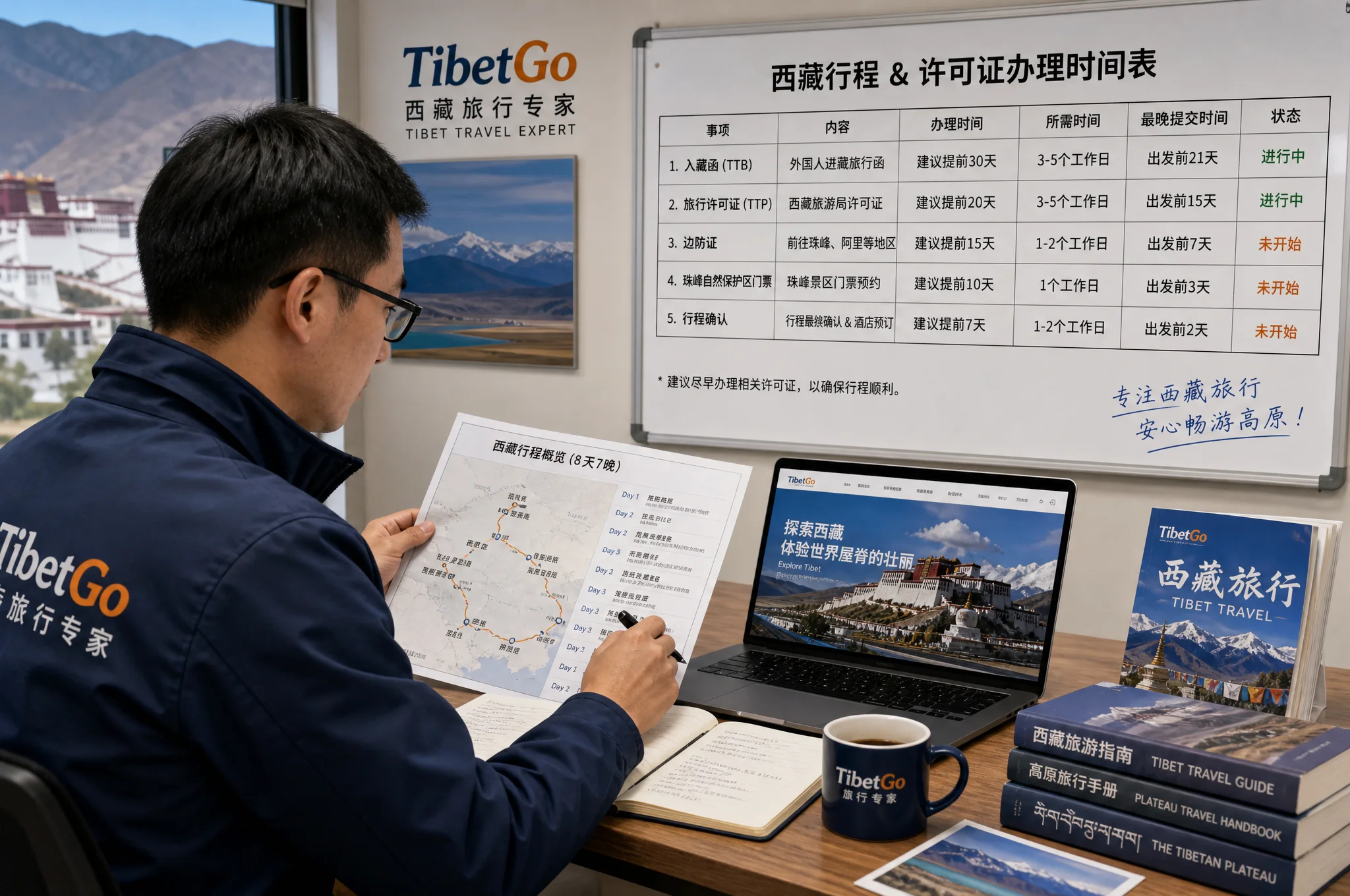
How Early Should You Apply?
The internal reference recommends:
- foreign visitors: approximately 15–20 working days before travel;
- Taiwan travelers: approximately 30 working days before travel;
- urgent cases: faster processing may sometimes be possible, but should not be the normal plan.
The timeframes above are for planning purposes only. Please be sure to start the application process as early as possible if:
your visa has not yet been issued; your itinerary includes Mount Everest, Mount Kailash, or border regions; your nationality requires an official invitation letter for a Chinese visa; or you plan to travel during peak season.
The safest booking sequence is simple: confirm your itinerary and travel documents, submit your application early, receive instructions regarding the Tibet Travel Permit, and—only then—book non-refundable and non-changeable transportation tickets
Flights, Trains and the Original Document
Foreign and Taiwan tourists may be unable to purchase tickets for all flights or trains to Tibet via standard online platforms.
If you encounter difficulties with these arrangements, you can:
Purchase offline or via an agency: In many cases, tourists need to purchase tickets through a travel agency or handle the purchase and verification in person at designated ticket counters or airline desks by presenting the original Tibet Travel Permit and valid identification (passport or Mainland Travel Permit for Taiwan Residents).
Boarding/Station Checks: When boarding flights or entering train stations for travel to Lhasa, staff will strictly verify the original Tibet Travel Permit for every passenger; without this document, boarding or travel will not be permitted.
Additional Permissions for Everest, Kailash and Border Routes
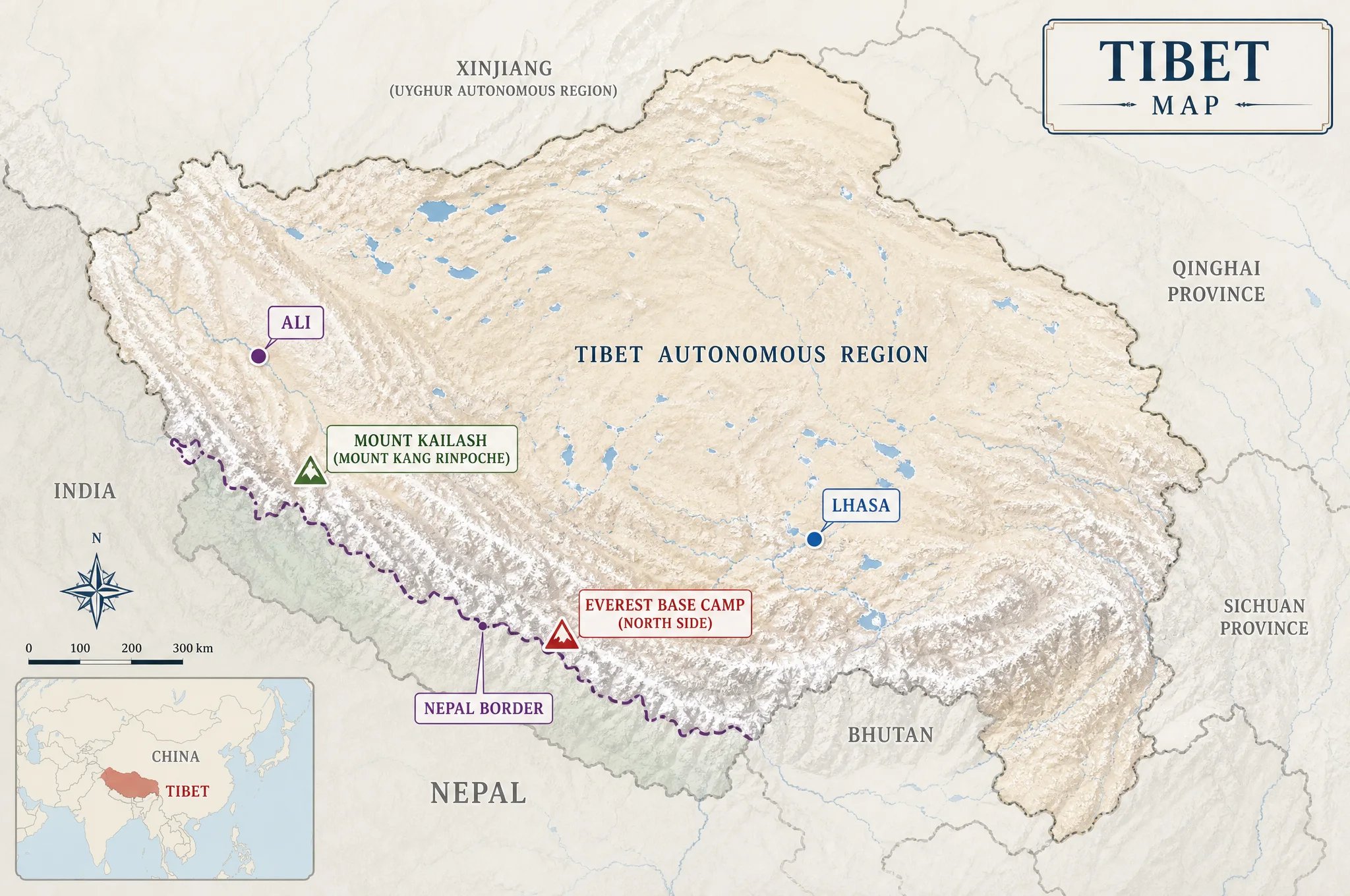
Mount Everest Base Camp
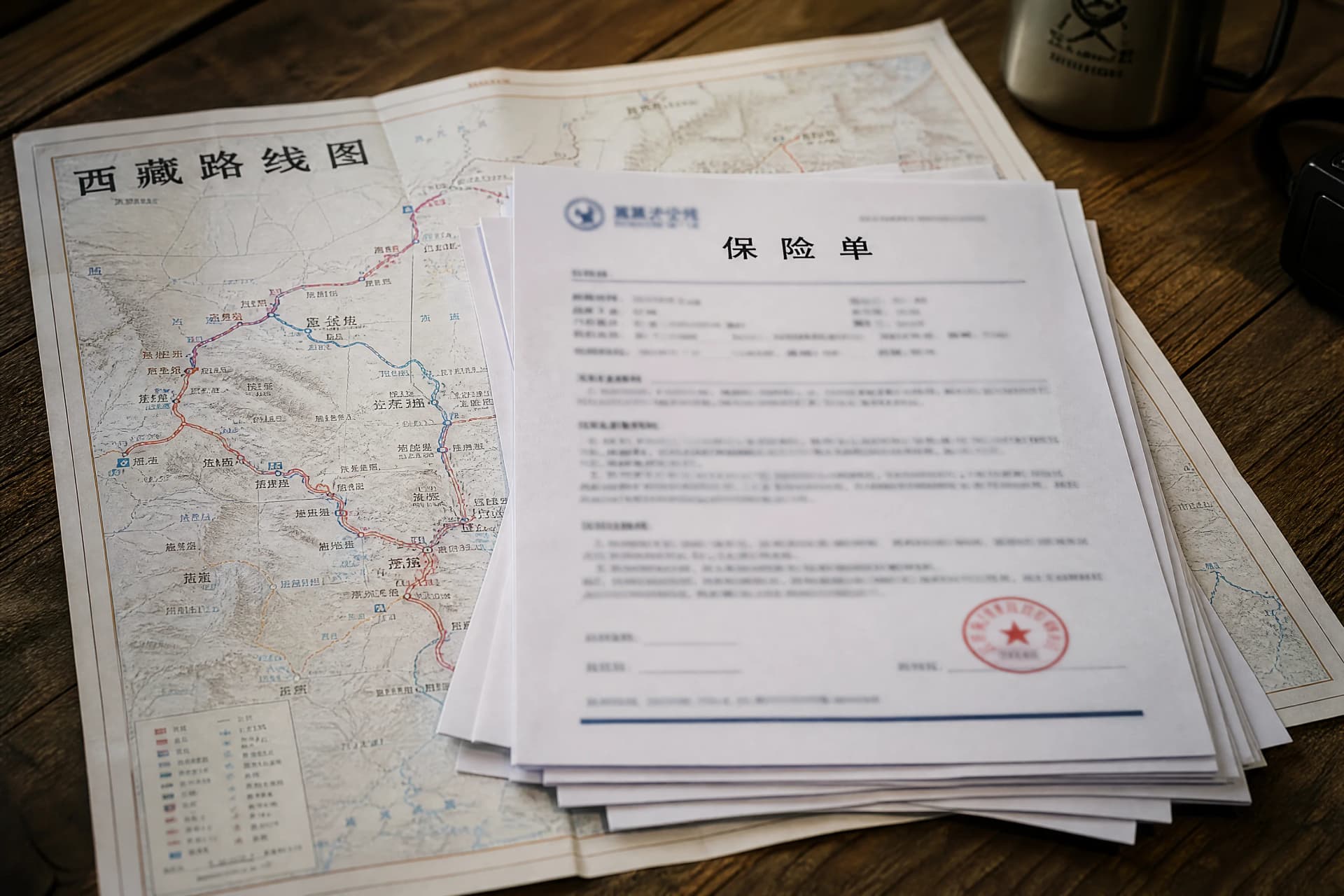
In addition to the Tibet Travel Permit, a Border Area Permit may also be required. Current regulations may dictate specific driving routes between Shigatse and the Everest region. Before presenting the itinerary to clients, please verify the approved routes, any additional permits needed, points of entry, and alternative options.
Mount Kailash and the Ngari Region
Travel to western Tibet involves longer drives, higher-altitude accommodation, and more complex logistics. Please confirm whether your permits cover the Mount Kailash kora (circumambulation), Lake Manasarovar, the Ngari region, and the border sections along the route, or if separate permits are required for different stages of the journey.
Tibet–Nepal Border
Please confirm the specific border crossing point, transfer arrangements, Nepal visa requirements, luggage handling procedures, contingency plans for border delays, and onward transportation. Planning a cross-border itinerary involves far more than simply outlining a scenic route.
Remote Destinations
Certain locations in the Shigatse, Shannan, Nagqu, and Ngari regions may be subject to restrictions for foreign tourists or require special approval. For any unusual destinations, be sure to contact a local ground handler to verify current access policies with the relevant authorities.
Costs, Non-Refundable Fees and Changes
Permit handling should be explained separately from the complete tour price. Ask for the following in writing:
permit and application service fees;
guide and vehicle services;
hotels and entrance tickets;
border transfer and document delivery;
which amounts are refundable;
which amounts become non-refundable after submission;
what happens if an authority changes route access.
Please note: Permit fees already paid may be non-refundable, non-changeable, and non-transferable. Furthermore, costs incurred may not be recoverable in the event of errors in submitted documents, late submissions, the provision of false information, or trip cancellation due to personal reasons.
Common Mistakes (Please Take Note)
Purchasing non-refundable or non-changeable flight tickets before confirming eligibility.
Submitting low-resolution or incomplete scanned documents.
Failing to notify the handling agency after renewing a passport or visa.
Changing the city of first entry after submitting the application.
Mistakenly assuming that the document checklist for a tourist visa applies to work or family visit visas as well.
Mistakenly assuming that China's visa-free entry policy grants direct access to Tibet.
Adding remote or border areas to the itinerary after submitting application materials.
Waiting until peak travel season to begin the application process.
Mistakenly assuming that digital documents alone are sufficient for boarding all flights or trains.
Relying blindly on information from outdated posts that lack a publication date..
Information to provide to TibetGo if you intend to travel
To facilitate a preliminary review of your itinerary and permit requirements, please provide the following information:
Nationality and passport type;
Country of residence;
Passport validity;
Visa or entry arrangements;
Planned travel dates;
City of initial entry and city of final departure;
Intended destinations;
Preference for a private tour or a small group tour;
Considerations regarding mobility, dietary requirements, or altitude acclimatization; and
Pre-booked travel arrangements.
Please submit this information via the [Custom Tibet Tour page](/custom-tour) or the [Contact page](/contact). Sharing your full travel plans with the agency early on helps avoid additional costs associated with major itinerary adjustments later.
Frequently Asked Questions
Is a Tibet Travel Permit the same as a China visa?
No. They are separate parts of the travel arrangement. Your visa or entry document concerns China entry; the permit is connected to organized access and travel in Tibet.
Can I apply for the permit without booking a tour?
International visitors normally work through an appropriately qualified local operator because the permit is connected to itinerary, transport, accommodation and guide arrangements. Ask exactly what the operator includes before paying.
How early should foreign visitors apply?
The internal planning guidance uses approximately 15–20 working days for many foreign visitors and about 30 working days for some Taiwan applications. Start earlier when visas, peak seasons, Everest, Kailash or border routes are involved.
Can I change my first entry city?
Do not assume so. The entry city may be part of the submitted file. Ask for written confirmation before changing flights or trains.
Do I need the original permit for a flight or train?
The requirement depends on the current transport process and entry method. Ask the operator exactly what must be carried and when.
Are permit fees refundable?
They may not be refundable or transferable after submission or processing. The current signed quotation and cancellation policy control the transaction.
Can I visit every remote place listed online?
No assumption is safe. Remote, border and sensitive areas must be checked for the current date, nationality and route.
Start With a Route and Document Check
The permit is not a souvenir document that can be arranged after every other decision has been made. It belongs at the beginning of the route-planning conversation.
Tell TibetGo who is traveling, how you plan to enter China, when you want to travel, where you want to go and whether you will continue to Nepal. The team can then tell you which parts of the plan are straightforward, which need additional documents and which details should remain flexible until the current rules are confirmed.
> Travel notice: Permit names, visa requirements, processing times, prices, route permissions and opening conditions may change. This guide is for trip planning and is not legal or medical advice. Confirm current requirements with TibetGo and the relevant authorities before travel.